A Spiritual Pilgrimage to the Temples of Abu Simbel
Embark on a spiritual journey to Abu Simbel, where the ancient temples of Ramses II and Queen Nefertari await. Discover the profound connections between history, culture, and spirituality in this unforgettable pilgrimage.


The Journey Through the Desert
As the first light of dawn broke over the horizon, I found myself embarking on a journey that promised to be as enlightening as it was awe-inspiring. The drive from Aswan to Abu Simbel, though long, was a meditative experience. The vast expanse of the Sahara Desert stretched out before me, a reminder of the timelessness of this ancient land. The early morning sun painted the landscape in hues of gold and amber, a sight that made the early wake-up call more than worthwhile.
Our guide, Omar, was a fountain of knowledge, sharing insights into the natural and cultural tapestry of the region. His commentary transformed the drive into a moving classroom, where every passing scene was a lesson in history and modernity. From the innovative Toshka Project to the vibrant local flora, each detail was a thread in the rich tapestry of Egypt’s past and present.
The journey was punctuated by a stop at a charming desert rest station, adorned with colorful decorations and offering a moment of respite. Here, amidst the simple beauty of the desert, I felt a profound connection to the land and its people, a connection that would only deepen as the day unfolded.
The Majesty of Abu Simbel
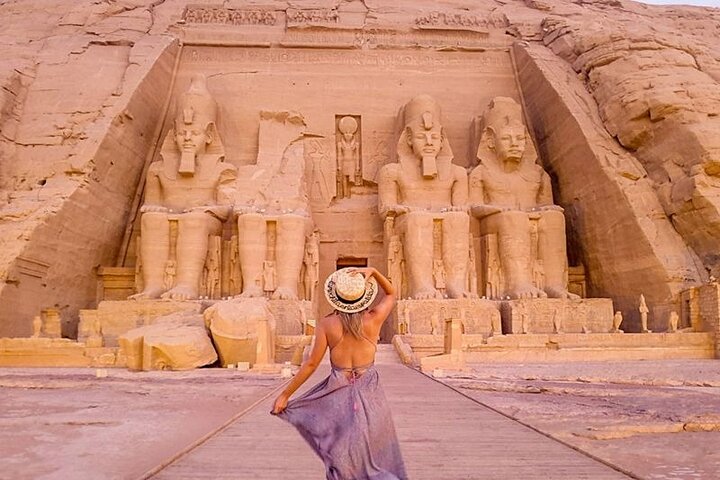
Upon arrival at Abu Simbel, the grandeur of the temples carved into the mountainside took my breath away. The Great Temple of Ramses II and the Temple of Queen Nefertari stood as testaments to the ingenuity and artistry of ancient Egypt. As I walked through these monumental structures, I was transported back to a time when the pharaohs ruled and the gods walked among men.
Omar’s lecture on Ramses II was both comprehensive and captivating. He painted a vivid picture of a ruler whose legacy has endured for millennia. I learned of Ramses’ military prowess, his devotion to his queen, and the monumental task of relocating the temples to save them from the rising waters of Lake Nasser. This feat of engineering was a testament to human determination and ingenuity, a theme that resonated deeply with me.
As I wandered through the temples, I marveled at the intricate carvings and the stories they told. Each hieroglyph was a window into a world long past, yet still very much alive in the stones of Abu Simbel. The balance of guided exploration and personal reflection allowed me to absorb the spiritual essence of the place, a pilgrimage of the soul as much as of the body.
Reflections by Lake Nasser
The day concluded with a serene moment by the shores of Lake Nasser. The lake’s tranquil waters mirrored the sky, creating a scene of breathtaking beauty. It was here that I found a moment of peace, a chance to reflect on the day’s journey and the deeper connections it had fostered.
In the quietude of the desert, I felt a profound sense of gratitude for the opportunity to walk in the footsteps of history. The experience was a reminder of the enduring power of human creativity and the spiritual connections that bind us to the past.
As I made my way back to Aswan, I carried with me not just memories of a remarkable day, but a renewed sense of purpose in my own journey. The temples of Abu Simbel had not only opened a window to the past but had also illuminated the path forward, a path of discovery, reflection, and spiritual growth.
For those who seek to deepen their understanding of history and culture, a visit to Abu Simbel is more than a tour; it is a pilgrimage, a journey into the heart of Egypt’s ancient soul. Abu Simbel Adventure