Immerse yourself in Beirut’s rich history on this small-group tour. Explore iconic landmarks, learn about the city’s past, and witness the remnants of ancient civilizations.
Immerse yourself in Beirut’s rich history on this small-group tour. Explore iconic landmarks, learn about the city’s past, and witness the remnants of ancient civilizations.
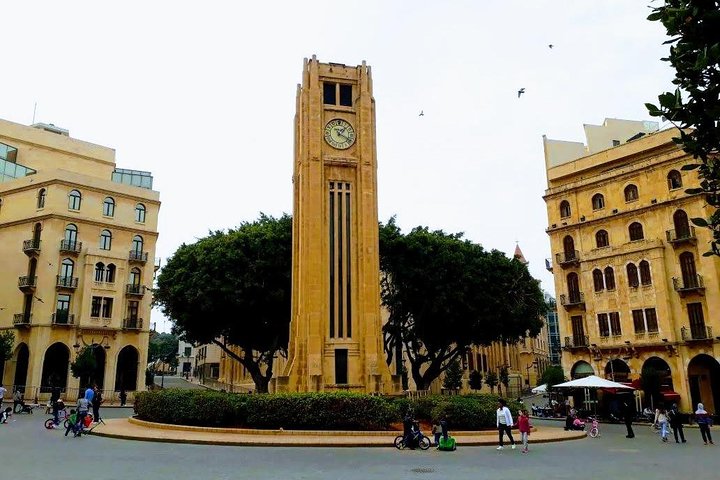
- Place de l’Etoile - Nejme Square, also known as Place de l’Étoile, is the central square in Downtown Beirut. It houses the Lebanese Parliament and its associated buildings, two cathedrals, a museum, and numerous cafes and restaurants. Renowned for its 1930 four-faced Rolex clock and its architecture, the square is a globally recognized symbol of…
- Place de l’Etoile - Nejme Square, also known as Place de l’Étoile, is the central square in Downtown Beirut. It houses the Lebanese Parliament and its associated buildings, two cathedrals, a museum, and numerous cafes and restaurants. Renowned for its 1930 four-faced Rolex clock and its architecture, the square is a globally recognized symbol of Beirut City.
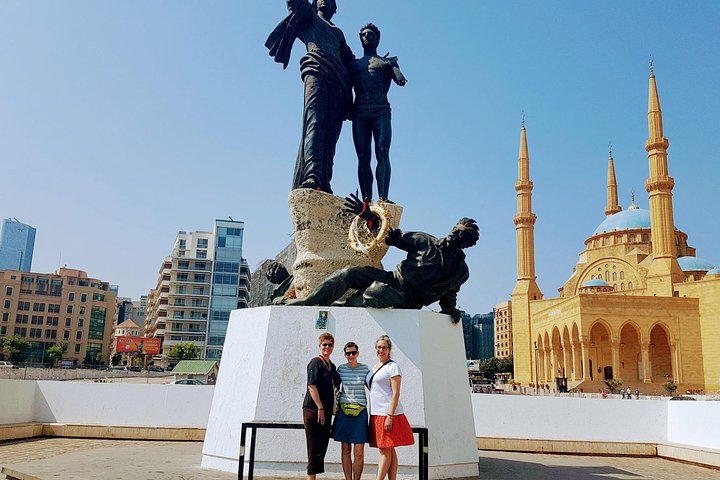
- Martyr’s Square - Martyrs’ Square is a prominent square in downtown Beirut, historically referred to as “Al Burj” or “Place des Cannons.” It is named in memory of the executions on May 6, 1916, by the Ottomans of Lebanese nationalists, ordered by Jamal Pasha during World War I.
- Mohammad Al-Amin Mosque - The Mohammad Al-Amin Mosque, also known as the Blue Mosque, is the largest mosque in Lebanon, situated in downtown Beirut. This grand amber-colored mosque near Martyrs’ Square was inaugurated in 2008 and features four minarets, each 65 meters tall. The mosque boasts multiple domes made from light blue tiles and several arches that are a couple of stories high.
- Al-Omari Mosque - The Al-Omari Grand Mosque was originally constructed during the era of Omar Bin El Khattab in 635 AD and later converted into the Church of Saint John by the Crusaders in the 12th century. It was transformed back into the city’s Grand Mosque by the Mamluks in 1291. Damaged during the Civil War, the mosque’s restoration was completed in 2004.
- Greek Orthodox Cathedral of Saint George - The Greek Orthodox Cathedral of Saint George serves as the seat of the Greek Orthodox Metropolitan bishop of the Greek Orthodox Archdiocese of Beirut and its dependencies. It is the oldest church in Beirut and one of the oldest in the region, located in the heart of Beirut’s city center. The first Christian temple on this site dates back to the mid-sixth century AD and is closely linked with Beirut’s renowned Law School.
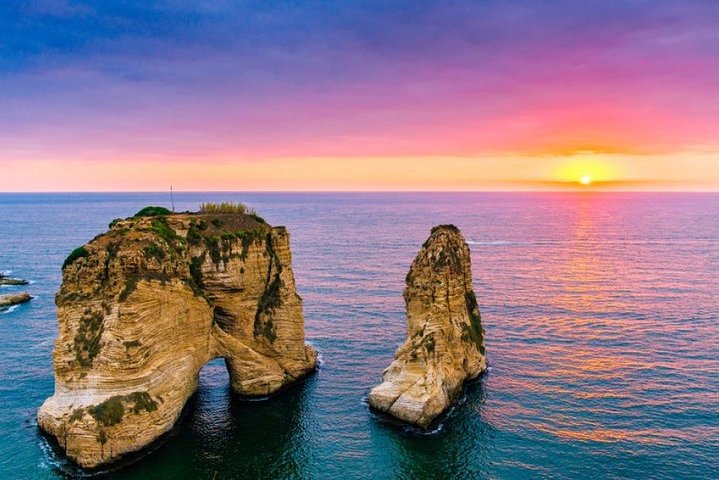
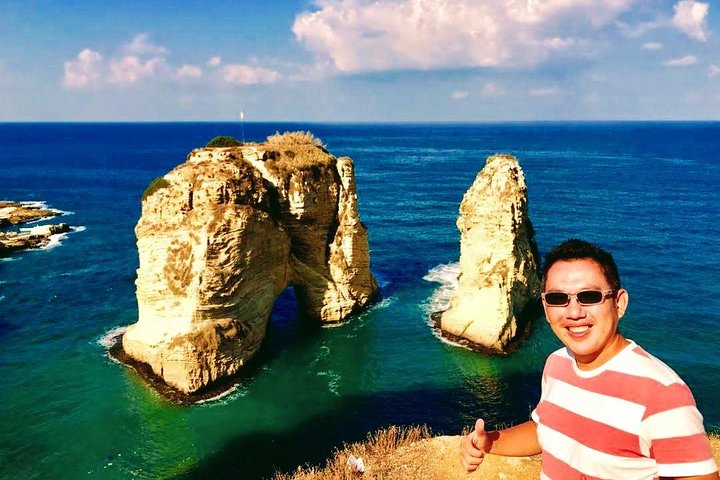
- Pigeon Rocks in Raouche - Pigeon Rocks is a breathtaking set of rock formations and a popular tourist attraction known for its iconic seaside surroundings, welcoming visitors to Beirut. Also known as the Rock of Raouché, these two massive rock formations stand as monumental sentinels at Beirut’s westernmost point.
- Corniche El Manara, Ain El Mraiseh, Beirut - Extending from the Ramlet al Bayda area to the Saint George marina, Al Manara Corniche is Beirut’s most famous seaside promenade. Adorned with palm trees, it offers stunning views of the Mediterranean Sea, including the renowned Pigeon Rock and the peaks of Mount Lebanon to the east.
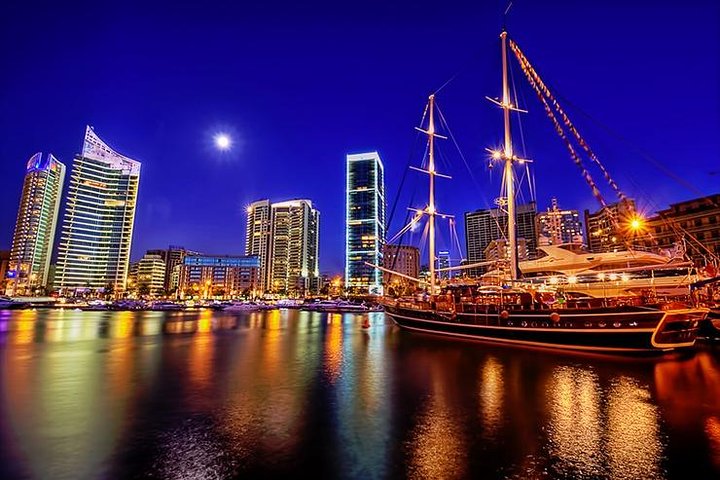
- Zaitunay Bay - Described as “Beirut’s finest leisure destination” on its official website, Zaitunay Bay is a modern waterfront promenade featuring shops and restaurants.
- Holiday Inn Hotel - This abandoned Holiday Inn Hotel is a significant war landmark in Beirut. Constructed between 1971 and 1974 during Beirut’s economic boom, it was a popular tourist destination in the Middle East. The hotel operated until the Lebanese Civil War began in 1975, after which it became a “war zone” during the “Battle of the Hotels,” where over 25,000 combatants fought for control of luxury hotels, including the Holiday Inn and the famous Phoenicia hotel. The hotel remains untouched, abandoned, and empty decades after the war, serving as a poignant reminder of the horrors of war to the Lebanese people.
- Beirut Souks - Beirut Souks is a bustling commercial district in Beirut City Center, featuring over 200 shops, 25 restaurants and cafes, an entertainment center, and a cinema complex. It is the largest and most diverse shopping and leisure area in Beirut.
- Roman Baths - The Roman Berytus baths are the largest outdoor site located in downtown Beirut. Discovered in 1968-1969, they underwent significant renovation in the mid-1990s. Roman Berytus had four major bath complexes, with the first established in the early first century under Augustus. The devastating Berytus earthquake in 551 AD destroyed all the baths. Today, the Roman Berytus Baths reflect the ancient traditions of the site, with one bath serving as a venue for artistic performances and concerts.
- Hotel pick up & drop off
- In-vehicle air conditioning
- Professional Guide
- Hotel pick up & drop off
- In-vehicle air conditioning
- Professional Guide
- Lunch
- Lunch
Join the Small-Group Beirut Historical Tour for an enthralling exploration of Beirut’s past. Discover ancient ruins, lively markets, and secret treasures alongside fellow explorers, revealing the rich cultural fabric that characterizes this dynamic city. Experience the enduring allure of Beirut, from its ancient civilizations to its modern-day resilience, in a way you’ve never seen before.
Join the Small-Group Beirut Historical Tour for an enthralling exploration of Beirut’s past. Discover ancient ruins, lively markets, and secret treasures alongside fellow explorers, revealing the rich cultural fabric that characterizes this dynamic city. Experience the enduring allure of Beirut, from its ancient civilizations to its modern-day resilience, in a way you’ve never seen before.
For a full refund, cancel at least 24 hours before the scheduled departure time.
For a full refund, cancel at least 24 hours before the scheduled departure time.


