Walking Through History: Berlin’s Timeless Landmarks
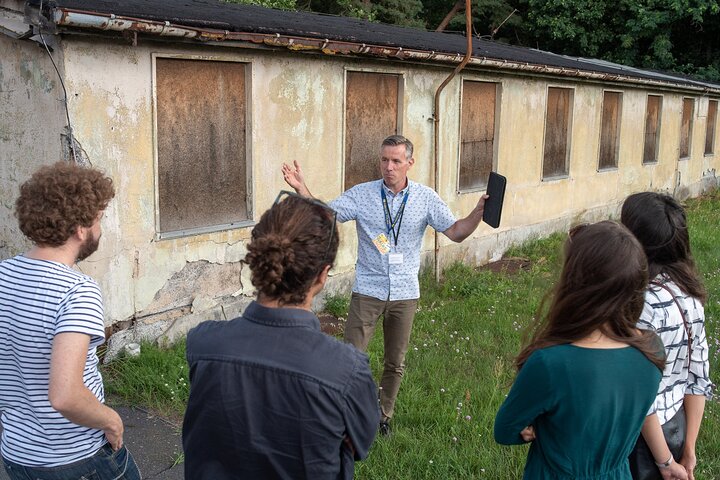
Drawn by Berlin’s rich history, I embarked on a walking tour to explore its iconic landmarks. Join me as I recount a journey through time, from Alexanderplatz to the Brandenburg Gate, guided by passionate storytellers who brought the city’s past to life.


A Stroll Through Time: The Heart of Berlin
Berlin, a city that has long been at the crossroads of history, offers an unparalleled opportunity to walk through the epochs that have shaped not only Germany but the world. As a former professor of European history, I found myself drawn to the Berlin Walking Tour to explore the city’s historic landmarks. The tour promised a comprehensive journey through Berlin’s storied past, and it did not disappoint.
Our journey began at Alexanderplatz, a bustling square that has witnessed the ebb and flow of Berlin’s fortunes. The iconic TV Tower loomed above us, a symbol of the city’s resilience and modernity. Our guide, Celia, brought the square to life with her vivid storytelling, weaving tales of its transformation from a medieval marketplace to a hub of socialist architecture. As we moved to the Neptune Fountain, Celia explained its symbolism, a testament to Berlin’s artistic heritage.
The tour continued to the Rotes Rathaus, the red-brick town hall that stands as a testament to Berlin’s civic pride. Here, Celia’s enthusiasm was infectious as she recounted the building’s history and its role in the city’s governance. The nearby Museum Island, a UNESCO World Heritage site, beckoned with its promise of cultural treasures, and I made a mental note to return for a more in-depth exploration.
Echoes of the Past: National Socialism and Beyond
As we delved deeper into Berlin’s history, Helena took the reins, guiding us through the ideological landscape of National Socialism. Her clear and didactic approach made the complex history accessible, even as the skies opened up in a deluge. Undeterred, Helena led us to the Neue Wache, a somber memorial that speaks to the city’s commitment to remembering its past.
The tour’s narrative shifted as we approached Checkpoint Charlie, a poignant reminder of the Cold War’s division. Helena’s insights into the geopolitical tensions of the era were both enlightening and sobering. The Topography of Terror, with its stark documentation of the Nazi regime’s atrocities, left a lasting impression, underscoring the importance of historical memory.
Our exploration of Berlin’s darker chapters concluded at the Holocaust Memorial. Here, Helena’s sensitivity and respect for the site’s significance were evident, as she guided us through the labyrinthine concrete slabs, each representing the lives lost in one of history’s darkest periods.
A Tapestry of Cultures: The Jewish Quarter and Beyond
The final leg of our journey was led by Juanma, whose passion for Berlin’s Jewish heritage was palpable. As we wandered through the Jewish Quarter, Juanma’s narrative was both rigorous and exciting, painting a vivid picture of the community’s contributions to the city’s cultural tapestry.
The Gendarmenmarkt, often hailed as Berlin’s most beautiful square, was a highlight of this segment. Juanma’s detailed exploration of the concert house and twin churches revealed the architectural harmony that defines this space. His insights into the cultural significance of the German State Opera added depth to our understanding of Berlin’s artistic legacy.
Our tour concluded at the Brandenburg Gate, a symbol of unity and peace. As I stood beneath its neoclassical arches, I reflected on the journey we had undertaken. Berlin, with its layers of history and vibrant present, had revealed itself in all its complexity. This walking tour was not just a journey through the city’s past but an invitation to engage with its ongoing story. For those who seek to understand Berlin’s soul, this tour is an essential experience.