


Embark on a VIP private city tour of Buenos Aires with a bilingual guide. Discover attractions and curiosities in a relaxed and exclusive atmosphere. Perfect for first-time visitors or those with limited time.
Embark on a VIP private city tour of Buenos Aires with a bilingual guide. Discover attractions and curiosities in a relaxed and exclusive atmosphere. Perfect for first-time visitors or those with limited time.
-
Caminito - Caminito is the most renowned pedestrian street in Buenos Aires. It stands as a top tourist attraction in the city, celebrated for its vibrant houses and rich historical and cultural importance.
Caminito is situated in the lively La Boca neighborhood, along the Riachuelo River and just 400 meters from La Bombonera, the Boca Juniors…
- Caminito - Caminito is the most renowned pedestrian street in Buenos Aires. It stands as a top tourist attraction in the city, celebrated for its vibrant houses and rich historical and cultural importance.
Caminito is situated in the lively La Boca neighborhood, along the Riachuelo River and just 400 meters from La Bombonera, the Boca Juniors stadium. This 150-meter-long curved pedestrian path showcases significant artistic works.
-
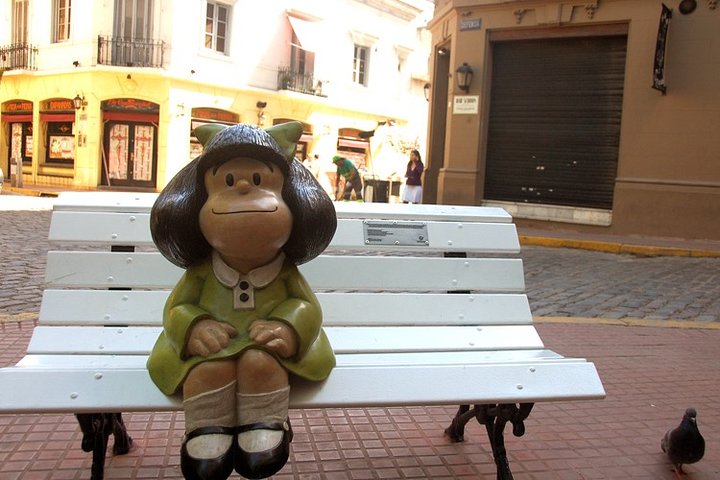
Mafalda Statue - The Mafalda Monument is a sculpture honoring the most famous character created by cartoonist Quino: ‘Mafalda’, depicted sitting on a bench.
The Mafalda Monument is located just a few meters from where the artist lived, in the San Telmo neighborhood, where a plaque commemorates ‘Mafalda lived here’. - Estadio Alberto J. Armando (La Bombonera) - Recognized by various international media as one of the most iconic soccer stadiums globally, and declared of “sports, tourist, and cultural interest in the city of Buenos Aires”, it was inaugurated on May 25, 1940. Diego Armando Maradona described this stadium as “The temple of Boca”. Additionally, sports legends like Pelé, Zico, Andrés Iniesta, and Thierry Henry, among others, have praised the experience at the Boca Juniors stadium. The stadium accommodates 40,000 seated spectators and 57,000 seated and standing spectators.
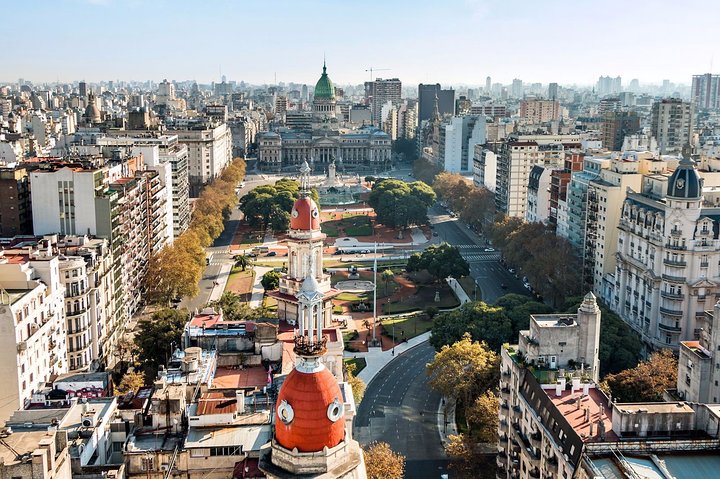
- Avenida de Mayo - Inspired by Madrid’s Gran Vía, Avenida de Mayo is one of the largest and most significant thoroughfares in Buenos Aires. It stretches from Plaza de Mayo, with the Casa Rosada at one end, to the National Congress building at the other. Officially opened in 1894, it offers a journey through the city’s entire history.
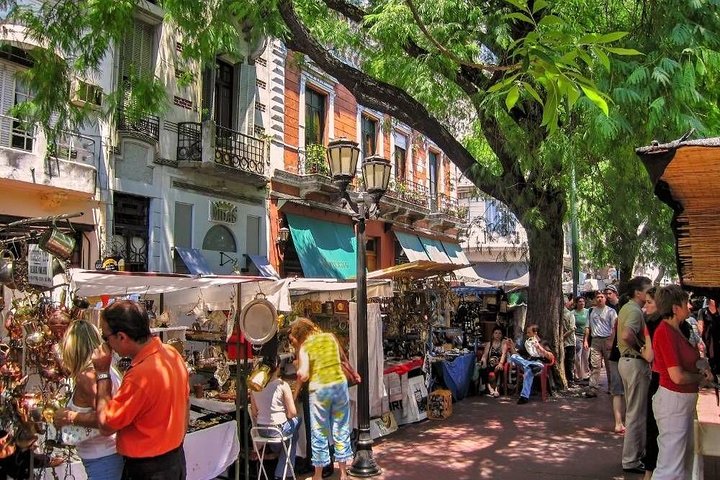
- Mercado de San Telmo - This large indoor market is located in the San Telmo neighborhood. While it retains old shops selling vegetables and meat, today it is a tourist hotspot with numerous antique dealers. The traditional neighborhood stalls, preserved for decades, coexist with antique dealers, reflecting the tourist boom in San Telmo. The building also houses some premises with street entrances, including greengrocers, liquor stores, a restaurant, and two notable bars: “San Pedro Telmo” and “La Coruña”.
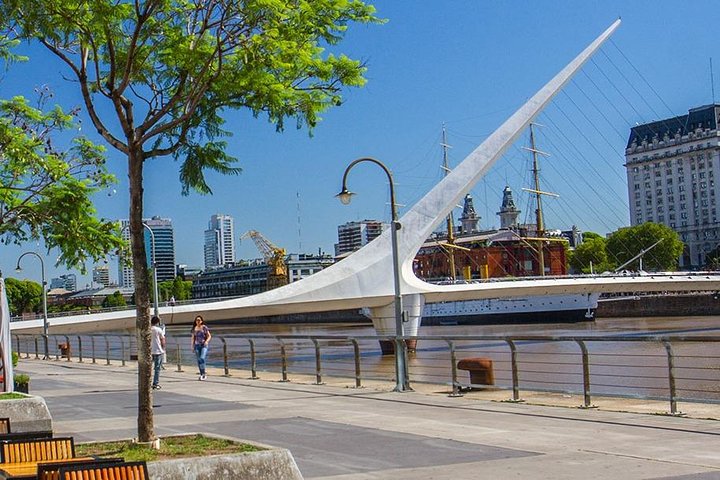
- Puente de la Mujer - The Puente de la Mujer, a symbol of the Puerto Madero neighborhood, is the first work in Latin America by the renowned Spanish architect Santiago Calatrava. It exemplifies the City’s ongoing effort to position itself at the forefront of art and architecture in the region. This revolving pedestrian bridge features one of the world’s largest turning mechanisms, designed to allow sailing vessels to pass through the docks of Puerto Madero. The work, crafted in Spain and donated to the City by a private individual, represents a couple dancing tango, with the white pole symbolizing the man and the curved silhouette of the bridge as the woman.
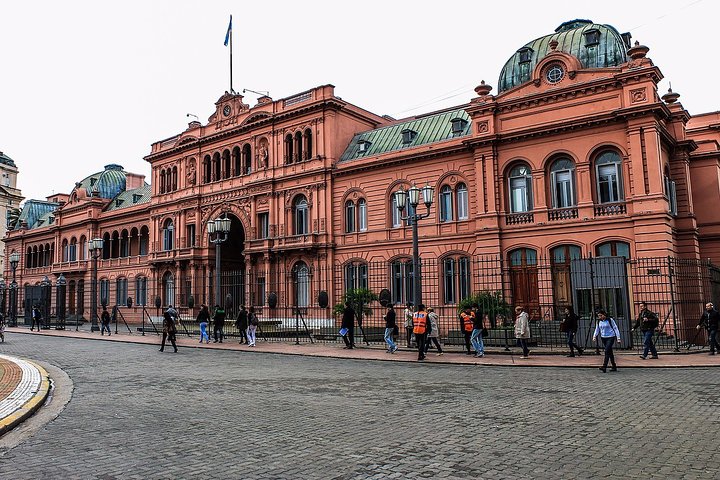
- Casa Rosada - This palace, located in front of Plaza de Mayo, serves as the seat of the National Government. The impressive pink building stands on the site where the Fort of Buenos Aires was established in 1580. It was the residence of Spanish viceroys and later housed, with some modifications, the authorities of successive national governments. The current building is the result of merging two previous structures: the presidential headquarters and the Palacio de Correos (at the corner of Hipólito Yrigoyen and Balcarce).
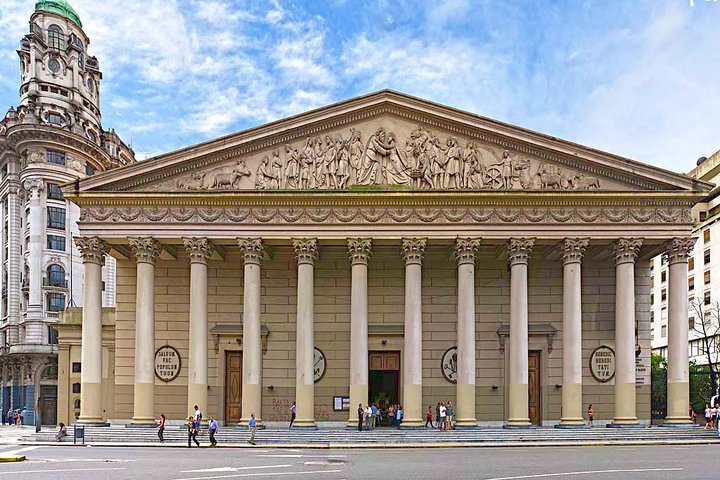
- Catedral - This is the main seat of the Catholic Church in Argentina. Besides being located in a key area of Buenos Aires, it has a long history of construction challenges. The current building is the sixth structure erected on this site since the second foundation of Buenos Aires. Its final design is neoclassical, with a profile rarely seen in cathedrals, giving it a closer resemblance to a Greek temple than a traditional Catholic building.
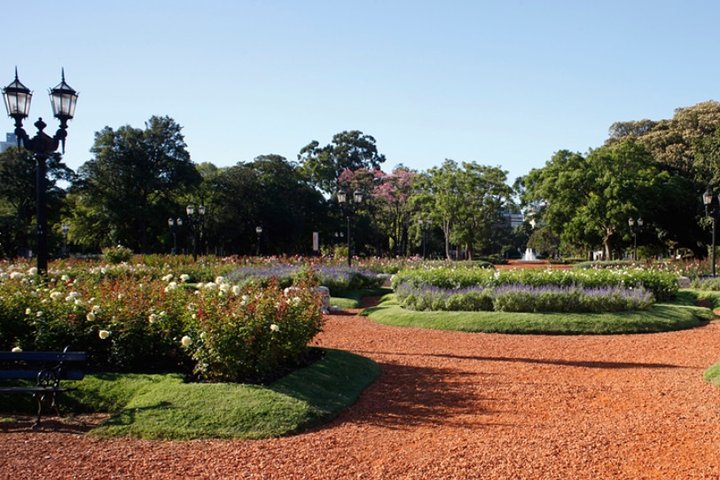
- Rosedal De Palermo - Within Parque 3 de Febrero in Palermo lies the Rosedal, featuring a collection of over 18,000 roses and a surrounding lake. It occupies land that belonged to Juan Manuel de Rosas until his defeat on February 3, 1852, in the Battle of Caseros. The project began with landscaper Carlos Thays, who also designed the Botanical Garden, Avellaneda Park, and Lezama Park, among others. His disciple Benito Carrasco completed it in 1914.
Every July, during the pruning season, residents and tourists visit gardeners to receive flowers or cuttings for new species reproduction. This ensures that in winter, the roses bloom healthy and strong, reaching their peak in October.
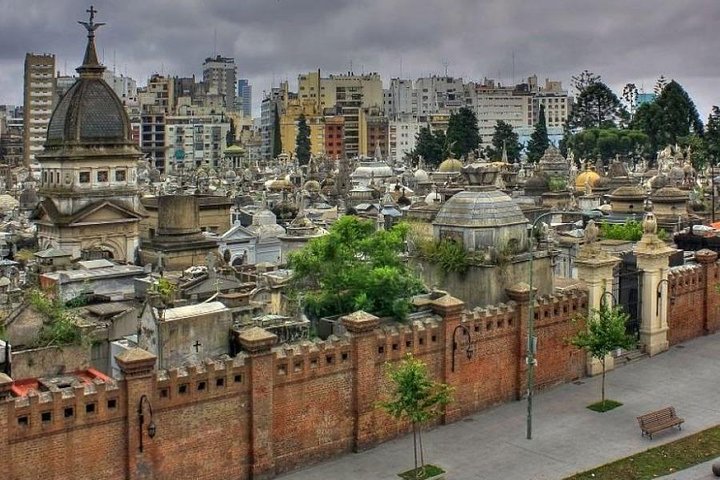
- Cementerio de la Recoleta - Located in the exclusive Recoleta neighborhood, named after the Recoletos monks’ convent, to which the neighboring Basilica Nuestra Señora del Pilar also belonged (the cemetery was built in the monks’ old garden).
It is the city’s most visited cemetery, known for its numerous and grand mausoleums and vaults, belonging to many key figures in Argentine history, such as Eva Perón (Evita), one of the most popular tombs. It is also worth visiting for its architectural value, showcasing a time when the country was an emerging economic power, and the city’s leading families competed to build splendid pantheons. Many vaults and mausoleums are the work of prominent architects and are adorned with marble and sculptures; over 90 vaults have been declared a National Historic Monument.
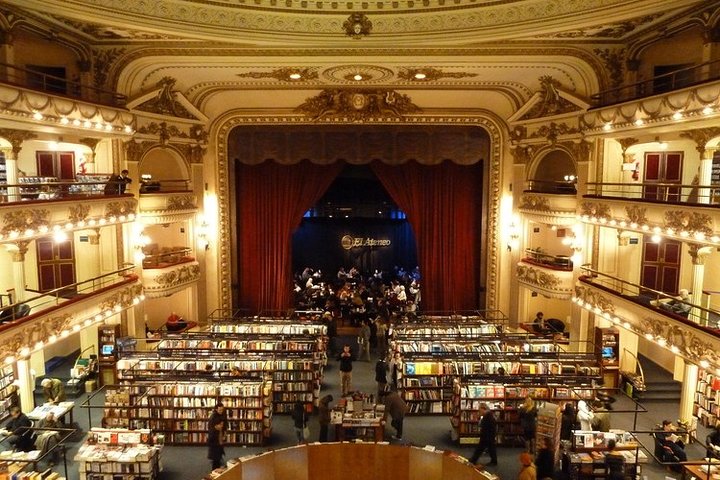
- El Ateneo Grand Splendid - The Athenaeum Grand Splendid was named the second-largest bookstore in the world by the British newspaper The Guardian. Built on the former Grand Splendid movie theater in the Recoleta neighborhood, it retains its original splendor and elegance, with a frescoed dome, original railings, and intact decor. On the old stage, with the velvet curtain slightly open, there is a bar inviting visitors to sit with a book in hand. Visitors can also enjoy the armchairs on either side of the main room or settle in the exclusive boxes that serve as small reading rooms. The basement is dedicated to children’s books, while the upper floor hosts exhibitions and displays.
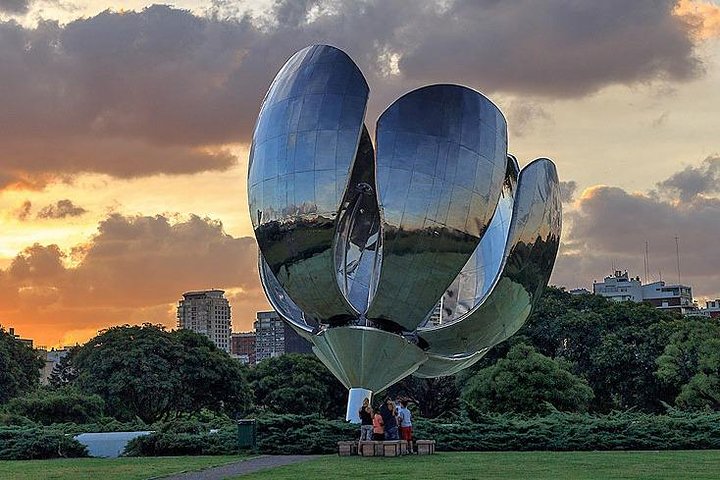
- Floralis Generica - This impressive 20-meter-high sculpture, dominating the United Nations square, was donated to Buenos Aires by its creator, Argentine architect Eduardo Catalano. Made of stainless steel and aluminum, it weighs 18 tons. It is the first moving sculpture controlled by a hydraulic system and photoelectric cells.
Inaugurated on April 13, 2002, its name, “Floralis Generica”, pays tribute to all flowers. It embodies the creator’s dream of constructing a large-scale structure that reflects the dynamism of our time.
-
At each tourist point, visitors will have between 15 and 20 minutes to take photos.
-The guide will accompany visitors at all times and assist with each photo.
-The guide will share the history of Buenos Aires and its development over the years.
-Discover the most beautiful bookstore in the world.
- Private transportation
- Bilingual guide throughout the tour providing information
- In-vehicle air conditioning
- Private transportation
- Bilingual guide throughout the tour providing information
- In-vehicle air conditioning
- Snacks
- Snacks
The VIP Private City Tour offers an opportunity to explore numerous attractions and intriguing spots in Buenos Aires in a relaxed and exclusive setting, accompanied by a bilingual guide. This tour is perfect for the initial days of your visit to the city. It is also ideal for cruise passengers or those in transit with limited time to explore. For those…
The VIP Private City Tour offers an opportunity to explore numerous attractions and intriguing spots in Buenos Aires in a relaxed and exclusive setting, accompanied by a bilingual guide. This tour is perfect for the initial days of your visit to the city. It is also ideal for cruise passengers or those in transit with limited time to explore. For those already familiar with the city, the customizable nature of this tour allows for a personalized experience, enabling visits to places not yet explored.
For a full refund, cancel at least 24 hours before the scheduled departure time.
For a full refund, cancel at least 24 hours before the scheduled departure time.


