Charleston’s Historic District: A Journey Through Time
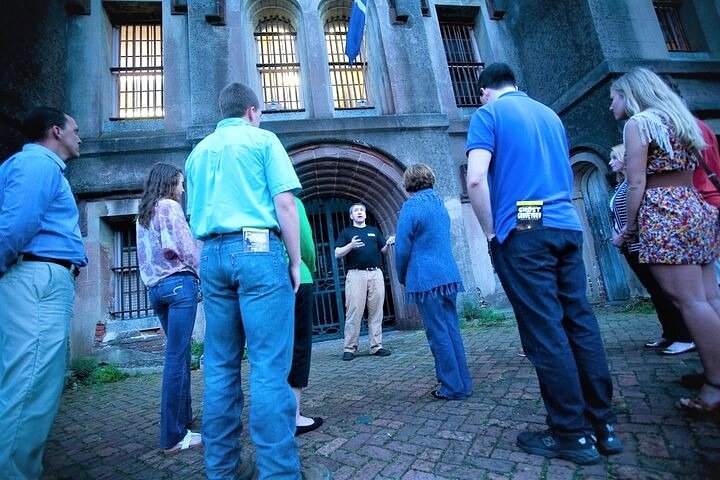
Drawn by Charleston’s rich history, I embarked on a walking tour of its Historic District. Join me as I explore the city’s storied past, from the Four Corners of Law to the vibrant Rainbow Row, guided by the entertaining and knowledgeable Al.


A Stroll Through Time: Charleston’s Historic District
Charleston, with its cobblestone streets and antebellum architecture, has long been a city that whispers tales of the past. As a former professor of European history, I have always been drawn to places where history is palpable, and Charleston’s Historic District is one such place. My wife and I embarked on the Charleston Walking Tour to delve into the stories that shaped this charming Southern city.
The Four Corners of Law
Our journey began at the iconic Charleston City Hall, one of the “Four Corners of Law.” This intersection, where Meeting Street and Broad Street converge, is a testament to the city’s rich legal and religious history. As we stood there, our guide Al, a man with a knack for storytelling, painted vivid pictures of the past. His humor and knowledge made the tales of old Charleston come alive.
Al’s ability to weave historical anecdotes with modern insights was impressive. He spoke of the architectural significance of the buildings around us, each a pillar of law—municipal, state, federal, and ecclesiastical. The grandeur of St. Michael’s Church, with its towering steeple, reminded me of the cathedrals of Europe, each stone echoing centuries of faith and governance.
Exploring the French Quarter
As we meandered through the French Quarter, the charm of Charleston unfolded with every step. The Dock Street Theatre, with its storied past, stood as a beacon of cultural heritage. Al regaled us with tales of its transformation from a hotel to a theater, a narrative that resonated with my love for historical metamorphoses.
The Slave Mart Museum was a poignant stop, a reminder of the city’s complex past. Al handled the subject with sensitivity, providing context and encouraging reflection. It was a moment that underscored the importance of remembering history in its entirety, a theme that often permeates my writings.
We continued to the Pink House, one of the oldest buildings in Charleston, its pastel hue a stark contrast to the weight of its history. The French Huguenot Church, with its Gothic Revival architecture, was another highlight, its spire reaching towards the heavens much like the churches of medieval Europe.
The Allure of Rainbow Row and the Battery
Our tour concluded with a stroll along Rainbow Row, a series of pastel-colored homes that have become synonymous with Charleston’s aesthetic. Al shared the history behind these vibrant facades, each house a chapter in the city’s architectural narrative. The colors, reminiscent of the Mediterranean coast, added a touch of whimsy to the historic district.
Finally, we reached the Battery, where the waters of the harbor glistened under the afternoon sun. The view of Fort Sumter in the distance was a fitting end to our journey, a reminder of Charleston’s strategic importance during the Civil War. As we stood in White Point Gardens, surrounded by ancient oaks, I couldn’t help but draw parallels to the gardens of European estates, where history and nature coexist in harmony.
In conclusion, the Charleston Walking Tour was a delightful exploration of a city steeped in history. Al’s expertise and engaging storytelling made the experience memorable, despite the occasional interruptions from passing garbage trucks. For those who, like me, revel in the stories of the past, Charleston offers a tapestry of history waiting to be unraveled.