






Embark on an 8-day private tour of Romania from Bucharest and immerse yourself in the country’s rich history, stunning landscapes, and mouthwatering traditional cuisine. Explore medieval sites, enjoy funny stories during the drives, and get a true understanding of Romania and its people.
Embark on an 8-day private tour of Romania from Bucharest and immerse yourself in the country’s rich history, stunning landscapes, and mouthwatering traditional cuisine. Explore medieval sites, enjoy funny stories during the drives, and get a true understanding of Romania and its people.
1. Curtea de Arges Monastery 2. Poenari Castle 3. Transfagarasan Highway 4. Sibiu City Tour - Overnight stay in Sibiu
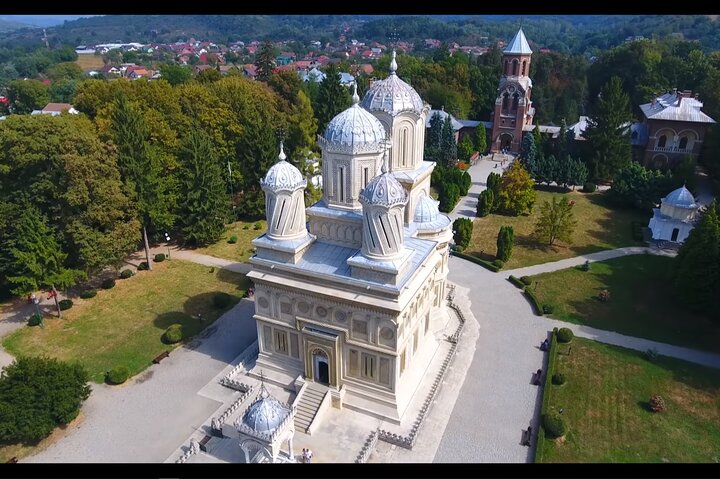
Curtea de Arges Monastery - Did you know that Curtea de Arges is renowned for the significant royal tombs it conceals? It is well-known that truly remarkable, beautiful, and enduring things often require sacrifice, a fact that…
1. Curtea de Arges Monastery 2. Poenari Castle 3. Transfagarasan Highway 4. Sibiu City Tour - Overnight stay in Sibiu
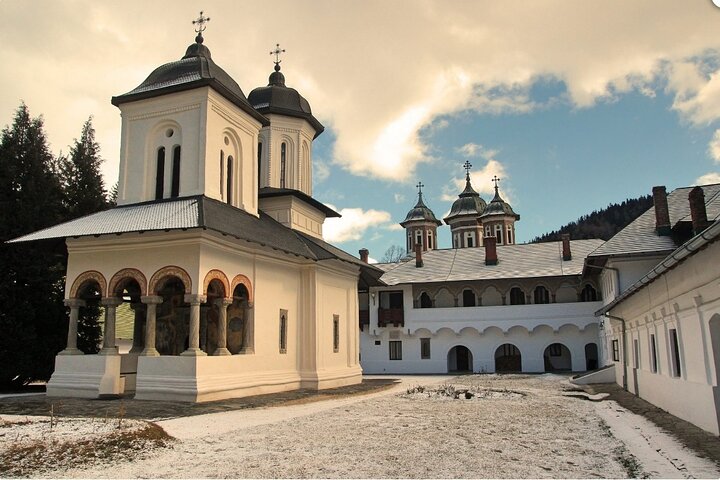
Curtea de Arges Monastery - Did you know that Curtea de Arges is renowned for the significant royal tombs it conceals? It is well-known that truly remarkable, beautiful, and enduring things often require sacrifice, a fact that becomes evident upon visiting the historic town of Curtea de Arges. With its rich and eventful past, visitors can explore the remnants of the Wallachian princely court, the 13th-century Royal Church, and the renowned Arges Monastery, a significant historical monument with a fascinating yet somber tale.
Poienari Castle - The ruins of Poienari Fortress are perched on a cliff overlooking the Arges River, at the base of the Carpathian Mountains. Constructed in the early 13th century by the initial Walachian rulers, the castle underwent several name and resident changes over the years before being abandoned and left in ruins. Recognizing the site’s potential, upon ascending the throne, he ordered the structure’s repair and fortification, transforming it into one of his primary fortresses. When the Turks attacked and seized the castle in 1462, Vlad managed to escape through a secret passageway leading north through the mountains.
Big Square (Piata Mare) - If you find yourself in Transylvania, Sibiu is a must-visit destination with a 900-year history. A city tour will help you understand why Sibiu was chosen as the European Capital of Culture, featuring the Evangelical Cathedral, the Sibiu Old City Center, and the town itself, which are among Romania’s most visited tourist attractions, catering to all tastes and offering a delightful travel experience for even the most discerning tourists.
For those who appreciate authentic cultural experiences, whether romantic or adventurous, Sibiu offers everything needed to relax and enjoy, leaving behind everyday stress for a fun and memorable trip. The beauty of this ancient citadel, recognized for its architecture, street layout, cultural and artistic heritage, and stunning natural scenery, is flanked by the Fagaras and Lotru mountains.
Transfagarasan Highway - Stretching over 150 kilometers, the Transfagarasan Highway is Romania’s most spectacular and renowned road, gaining fame from its feature on BBC’s Top Gear in 2009, making it one of the country’s top tourist attractions. Open fully from June to October, the road’s highest point is at 2042 meters, where a tunnel connects the northern and southern sides at Lake Balea (Balea Lac).
1. Turda Salt Mine 2. Cluj Napoca 3. Surdesti Wooden Church - Overnight in Vadul Izei (Maramures)
Salina Turda - This location is a visual and physical delight, as the purifying saline air is especially beneficial for those with respiratory issues like allergies or asthma. Visitors can discover remnants of Roman heritage, as salt mining in the area dates back thousands of years. The site includes the former Iosif, Terezia, and Rudolf mines, and unique medieval salt exploitation machinery in Europe – the hardware, the crivac (or gepel), the salt mill, as well as an altar carved into the salt wall and the intricately crafted “Stairway of the Rich.”
Gradina Botanica “Alexandru Borza” - When traveling through Transylvania, a Cluj Napoca City Tour is a must on your itinerary. Prepare your camera, as the Old City Center boasts numerous unique historical and architectural monuments, Baroque, Renaissance, and Gothic-style buildings, some dating back to the 17th century, along with friendly and welcoming locals. Not to mention the popular restaurants and delicious local cuisine, which may require a wait before enjoying a meal.
Surdesti Wooden Church - The warmth of wooden constructions is unmatched, and the Surdesti church offers even more. Visitors are often so impressed they metaphorically tip their hats – not surprising, considering the church’s tower measures an impressive 54 meters. Imagine the craftsmanship involved in creating this 72-meter high wooden masterpiece, a challenging feat even with modern technology, and built in 1721, it is considered an architectural marvel.
1. Explore Maramures (local market) 2. Merry Cemetery 3. Sighet Memorial Museum - Overnight in Vadul Izei (Maramures)
Merry Cemetery - This Romanian journey promises history, culture, adventure, and fun. The Dacians, our brave and wise ancestors who worshiped the god Zalmoxis, would laugh at funerals and cry at births. In Maramures, traces of historical continuity remain, most notably in Sapanta, home to the unique Merry Cemetery. The crosses and tombstones, each a skillful and colorful artwork, feature humorous poems about the deceased that will leave you in stitches.
Memorial of the Victims of Communism and of the Resistance - To understand why Romanians fought so hard against communist oppression, visit the Memorial Museum for the Victims of Communism to begin comprehending the totalitarian regime’s damage and the immense pain and suffering it caused in a short time.
Sapanta-Peri Monastery - Sapanta Peri Monastery is a significant church in Maramures. Located near Sapanta Village, within a dendrology park, the wooden church was built in 1391. In 1391, Dragos Voda’s nephews donated lands and properties to Peri Monastery, leading to the construction of a stone church. For 312 years, the Romanian Diocese of Maramures used the stone church as its headquarters, with the Archangel Michael (Sfantul Arhanghel Mihail) as the patron saint.
1. Barsana Monastery 2. Borgo Pass Road 3. Ciocanesti Village - Overnight in Gura Humorului
Barsana Monastery - One of Romania’s tallest wooden churches (57m height). Walking barefoot through the grass connects you with the earth, and stepping into the courtyard of Romania’s most beautiful wooden monastery, the Barsana Monastery, connects you spiritually with the sky and God. If you think you’ve seen breathtaking places before, this trip to Maramures might change your mind. With its enchanting scenery and timeless history, this magical place has captivated tourists and locals for centuries.
Tihuța Pass - Tihuta Pass, or Borgo Pass, is located in the country’s north, allowing passage across the Bârgău mountains from Moldavia to Transylvania. Situated at 1201m, between Măgura Calului peak (1229m) and Piatra Fântânele mountain (1067m), the road was first built between 1812-1817 by the Austro-Hungarian Army’s Council of War. Paved in 1969, the road is usually busy, with potential delays behind trucks, but few villages along the route allow for acceptable cruising speed. The road conditions are excellent, with well-maintained asphalt and many wide curves that will bring a smile to your face. Remember to stop and admire the stunning views.
Ciocanesti - A village in Northern Romania, Ciocanesti is one of Europe’s most colorful destinations, according to Lonely Planet. In a feature titled “Places that pop: 10 of Europe’s most colourful destinations,” Lonely Planet writer Tamara Sheward lists “vibrant villages, technicolour towns, and dazzling districts” worth visiting, including Ciocanesti commune in Suceava county, Northern Romania. “Carpathian Mountains. The name evokes images of vampires, werewolves, and enchanted forests. But in Bucovina’s historic region, Ciocanesti defies every spooky cliché: after all, what could be less terrifying than an entire village painted like Easter eggs?” reads the description.
1. Voronet Monastery 2. Sucevita M. 3. Moldovita M. 4. Humor M. 5. Egg Painted Museum - Overnight in Gura Humorului
Manastirea Voronet - The Voroneț Monastery is a medieval monastery in the Romanian village of Voroneț, now part of Gura Humorului. It is one of the famous painted monasteries from southern Bukovina, in Suceava County. Constructed by Stephen the Great in 1488 over 3 months and 3 weeks to commemorate the victory at the Battle of Vaslui, it is often called the “Sistine Chapel of the East.” The frescoes at Voroneț feature an intense shade of blue known in Romania as “Voroneț blue.” Did you know that Voronet Monastery was founded by Stephen the Great? Dubbed the “Sistine Chapel of the East,” it attracts tens of thousands of tourists annually, with at least three unique elements making it a highlight of your Moldavia and Bucovina trip. The most impressive aspect of the church’s artwork, both inside and outside, is the exceptional background color – the famous Voronet blue!
Humor Monastery - To understand the importance of religion to our people, tour Romania and witness the numerous houses of worship built and destroyed by enemies throughout history. Striving to protect their spiritual treasures, people erected churches away from the world’s eyes, some hidden in the woods, others nestled within rock caves at high altitudes. Humor Monastery, built approximately 500 years ago, is an example of a fortified monastery that has endured over the centuries. After the first church here, built around 1400, was destroyed, the second one, built in 1530 with thick river rock walls, was meant to be a place of worship that would withstand the test of time.
Sucevita Monastery - Sucevita and Voronet are two of the most beautiful Romanian monasteries, part of the international cultural and spiritual patrimony, making them essential to any trip to Romania and northern Moldavia. Even if you haven’t read the Bible, the biblical scenes and icons painted on Sucevita Monastery’s walls provide stunning and vivid visual support in understanding Christianity’s history. The fortified church is like an open book for anyone who enters its doors, and seeing it in person reveals why it was included on the UNESCO World Heritage list of cultural landmarks.
Moldovita Monastery - For a spiritual journey to a place echoing with the fervent prayers of hundreds of thousands who found solace here throughout history, venture through the Carpathians and Balkans to one of Romania’s oldest monastic settlements, built in 1532, home to Moldovita Monastery. The fortified church combines Byzantine, Gothic, and Moldavian styles, but its unique mural artwork, both inside and outside, truly impresses visitors.
Muzeul International al Oualor Lucia Condrea - Since the summer of 1993, artist Lucia Condrea opened a museum in Moldovita (Bukovina, Suceava- Romania) bearing her name, unique in Romania and possibly the world, considering the artistic value of the exhibits. The museum contains over 5500 exhibits, artistically arranged across two building levels in 56 display cases.
1. Bicaz Gorge 2. Nicolae Popa Museum 3. Red Lake - Overnight in Sighisoara
Bicaz Canyon - The gorge was carved by the Bicaz River and serves as a passageway between Moldova and Transylvania. It is a notable location to spot the wallcreeper, a rare cliff-dwelling bird. The road along the 8 kilometers of ravines, often winding with rock on one side and a sheer drop on the other, is one of the country’s most spectacular drives. Within the gorge is Lacul Roșu (the Red Lake), with traditional cabins, hotels, and its famous lake (situated at 980m altitude) formed by a landslide in the 19th century. Cheile Bicazului is a primary rock climbing site in Romania.
Lacu Rosu - Although the Red Lake is a young formation, its formation conditions and timing are much debated. During its formation, the lake area was hardly accessible and economically unexplored. According to Franz Herbich, the Red Lake formed in 1838, justified by the January 23, 1838 earthquake, repeated in February, which could have caused a landslide. Another formation year is 1837, argued by violent storms and heavy rains.
The Popa Museum - Located 12 kilometers from Targu Neamt, in Tarpesti, Neamt County, the Nicolae Popa Museum is an interesting and notable sight. Founded in the ‘70s by local sculptor Nicolae Popa in his own home, after being wounded in World War II, imprisoned by communists for opposing the regime, and left with only his house, Nicolae Popa championed Romanian values. Through hard work and dedication, driven by a strong artistic inclination, he became one of Romania’s most valued and appreciated naive sculptors and a true folklore creator.
1. Sighisoara City Tour 2. Viscri Village 3. Brasov City Tour - Overnight in Brasov
Sighisoara Clock Tower - Begin the Sighisoara Old Town tour with a visit to the Clock Tower and Arms museum. To experience life in the Middle Ages, visit Sighisoara, Romania’s medieval town, and Count Dracula’s (Vlad the Impaler) birthplace. Built in 1280, the Sighisoara Citadel is not only one of Romania’s most visited tourist attractions but also a living medieval fortress, inhabited for over 700 years – a rarity.
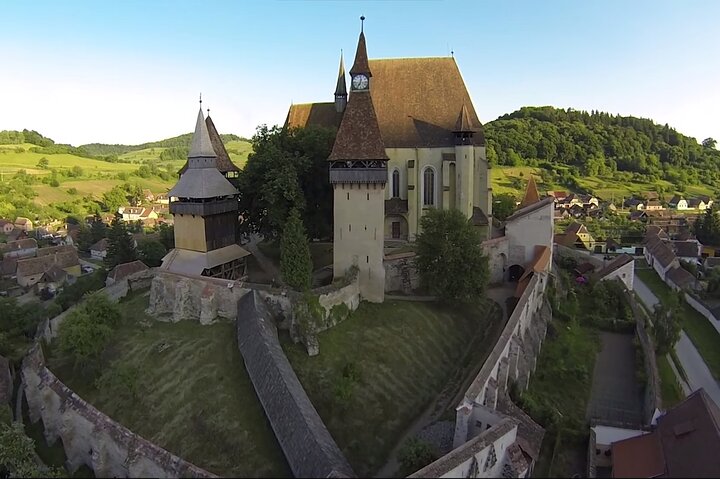
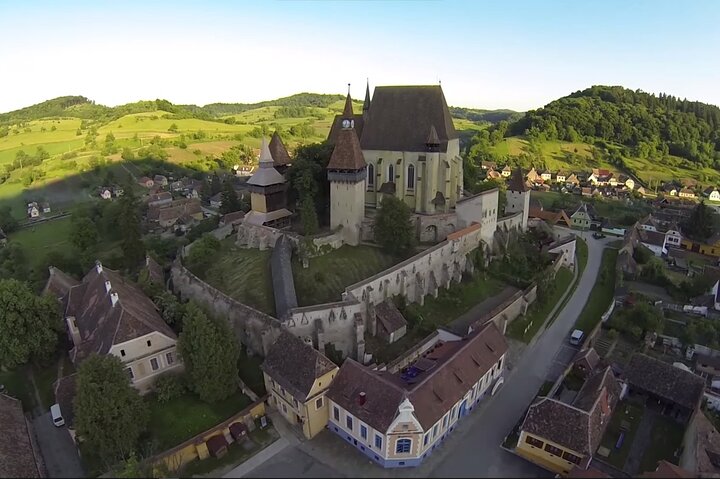
Village de Viscri - With a history dating back to the 12th century, Viscri is perhaps Romania’s most famous village. Prince Charles’ visits, its fortified church, and the Mihai Eminescu Trust’s activities have helped this small village reinvent itself in recent years. Its promotion has been so successful that Viscri is now one of Transylvania’s must-see attractions.
Piaka Sfatului - The Council Square (Piața Sfatului in Romanian, former Marktplatz in German, Főtér or Tanács tér in Hungarian) is located in Brașov’s historic center, Romania. It gained market rights in 1520, but has hosted weekly and annual markets since 1364, attracting merchants from near and far. Surrounded by 18th-19th century houses, most are historical monuments.
1. Bran Castle 2. Peles Castle 3. Sinaia Monastery - Back to Bucharest
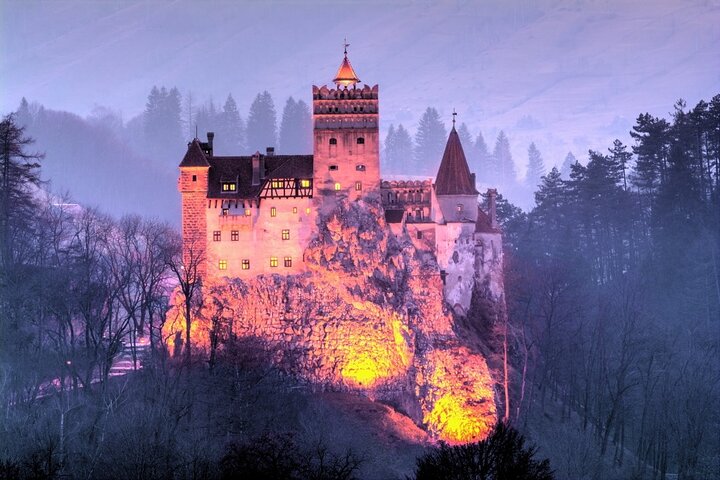
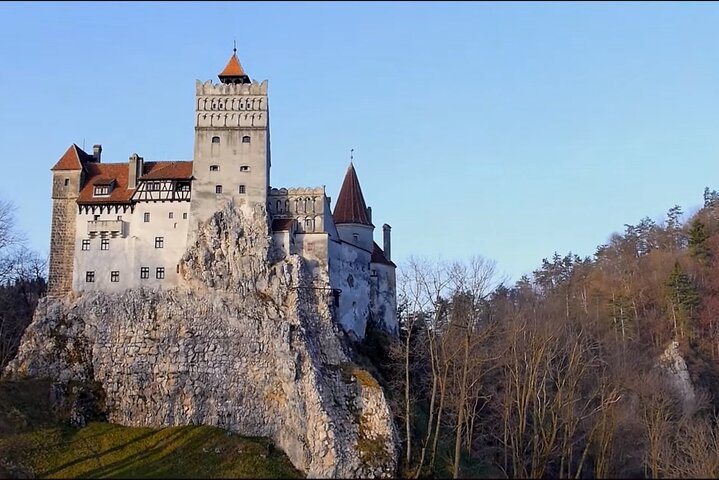
Bran Castle (Dracula’s Castle) - Bran Castle, a blend of myth and history. Bram Stoker’s fictional portrayal of Dracula’s castle closely resembles Bran, leading many to believe he used its descriptions to create Count Dracula’s fictitious home. Outside the castle, visitors can sample traditional foods: handmade cheeses, pálinka (plum and pear brandy), and traditionally-produced ham and sausages.
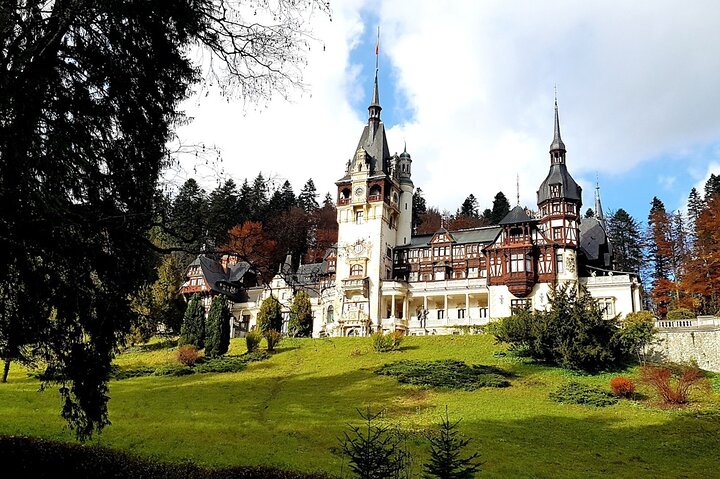
Peles Castle - Once upon a time, there was a beautiful castle… If you plan to write your memoirs or boast about seeing Europe’s most beautiful castles, the Romanian royal family’s summer residence is one of Romania and Europe’s most important tourist attractions, and you’ll soon understand why. Annually, thousands of notable figures and hundreds of thousands of tourists book tours of Romania to admire its beauty and, for a few hours, feel like royalty.
Manastirea Sinaia - The Sinaia Monastery, located in Sinaia, Prahova County, Romania, was founded by Prince Mihail Cantacuzino in 1695 and named after Saint Catherine’s Monastery on Mount Sinai in Egypt. As of 2005, it is home to 13 Christian Orthodox monks led by hegumen Macarie Boguș, and is part of the Bucharest archdiocese.

- Exclusive private car (Tourism or Minibus) for your group
- Tailored hotel recommendations to fit your budget
- Dedicated licensed English-speaking guide/driver for the entire tour
- Complimentary Wi-Fi in a comfortable car
- Guide’s accommodation, meals, and entrance fees included
-
All car expenses covered, including gasoline, parking, and tolls
-…
- Exclusive private car (Tourism or Minibus) for your group
- Tailored hotel recommendations to fit your budget
- Dedicated licensed English-speaking guide/driver for the entire tour
- Complimentary Wi-Fi in a comfortable car
- Guide’s accommodation, meals, and entrance fees included
- All car expenses covered, including gasoline, parking, and tolls
- Flexible itinerary with the freedom to modify post-tour start
- Accommodation, meals and beverages
- Entrance fees as per the itinerary
- Accommodation, meals and beverages
- Entrance fees as per the itinerary
Expect plenty of driving and amusing stories along the way :) It’s the perfect way to get to know Romania and its people!
Embark on the adventure of a lifetime with this 8-day tour of Romania. Carefully curated to offer a variety of rich sensory experiences, the tour includes visits to medieval sites, encounters with the wilderness featuring deep…
Expect plenty of driving and amusing stories along the way :) It’s the perfect way to get to know Romania and its people!
Embark on the adventure of a lifetime with this 8-day tour of Romania. Carefully curated to offer a variety of rich sensory experiences, the tour includes visits to medieval sites, encounters with the wilderness featuring deep forests, colorful wildflowers, and refreshing mountain air (in the appropriate season). Additionally, enjoy modern exhibits and savor traditional herbs and spices in the delicious foods sampled in each medieval town visited.
For a full refund, cancel at least 24 hours before the scheduled departure time.
For a full refund, cancel at least 24 hours before the scheduled departure time.