Embark on a 5-day Golden Triangle Tour and explore the enchanting cities of Jaipur, Agra, and Delhi. Discover UNESCO World Heritage sites, majestic palaces, and the iconic Taj Mahal.
Embark on a 5-day Golden Triangle Tour and explore the enchanting cities of Jaipur, Agra, and Delhi. Discover UNESCO World Heritage sites, majestic palaces, and the iconic Taj Mahal.
- Hawa Mahal - Palace of Wind - The Hawa Mahal is a renowned landmark in Jaipur. Constructed by Sawai Pratap Singh, this palace of winds was designed for the royal family to enjoy a site accessible to the public. The palace is a visual delight with its towering curved latticework arches.
- City Palace of Jaipur - The City Palace is another…
- Hawa Mahal - Palace of Wind - The Hawa Mahal is a renowned landmark in Jaipur. Constructed by Sawai Pratap Singh, this palace of winds was designed for the royal family to enjoy a site accessible to the public. The palace is a visual delight with its towering curved latticework arches.
- City Palace of Jaipur - The City Palace is another must-see in Jaipur, celebrated for its artistic and architectural features. The palace boasts expansive gardens and courtyards that cover a vast area.
- Jantar Mantar - Jaipur - The Jantar Mantar monument in Jaipur houses the world’s largest stone sundial and is a UNESCO World Heritage site. Built by Rajput King Sawai Jai Singh, it showcases the architectural styles of its era. The Jantar Mantar continues to function as an astronomical observatory, attracting unique visitors from around the globe.
- Jal Mahal - The Jal Mahal, or water palace, is located in the picturesque Man Sagar Lake in Jaipur City. This exceptional Rajput cultural structure was renovated and expanded in the 18th century by Maharaja Jai Singh II of Amber. It is a magnificent five-story building made of red sandstone.
- Abhaneri - Known for its remarkable ‘Baoris’ (step wells) and the Harshat Mata Temple, the village of Abhaneri is believed to have been founded by King Raja Chand. Originally named Abha Nagri, meaning the city of brightness, it was renamed due to mispronunciation. Step wells are a unique Indian concept, serving as cool retreats and water reservoirs during dry periods. It was customary to wash hands and feet before entering the temple, adjacent to the Chand Baori.
- Fatehpur Sikri - This splendid fortified ancient city, located 40 km west of Agra, was the brief capital of the Mughal Empire during Emperor Akbar’s reign. It was the first planned city of the Mughals, designed in a blend of Indian, Persian, and Islamic architecture. It became a UNESCO World Heritage Site in 1986.
- Mehtab Bagh - Mehtab Bagh, or Moonlight Garden, offers a romantic view of the Taj Mahal at sunset. Built by Emperor Babur, it was the last of 11 gardens constructed along the Yamuna River’s east bank. Mehtab Bagh was designed as part of the Taj complex, perfectly aligning with the Taj gardens, making it an ideal spot to admire the monument’s beauty at sunset.
- Tomb of Itimad-ud-Daulah - The Tomb of I’timād-ud-Daulah is a Mughal mausoleum in Agra, often described as a “jewel box” and sometimes referred to as the “Baby Tāj.” It is considered a precursor to the Tāj Mahal.
- Agra Fort - Agra Fort is a massive fortification, another majestic creation by Mughal Emperor Akbar the Great, constructed from red sandstone. It houses many beautiful palaces, including Diwan E Aam, Khas Mahal, Pearl Mosque, and Musamman Burj. It is also the site where Aurangzeb imprisoned his father, Shah Jahan.
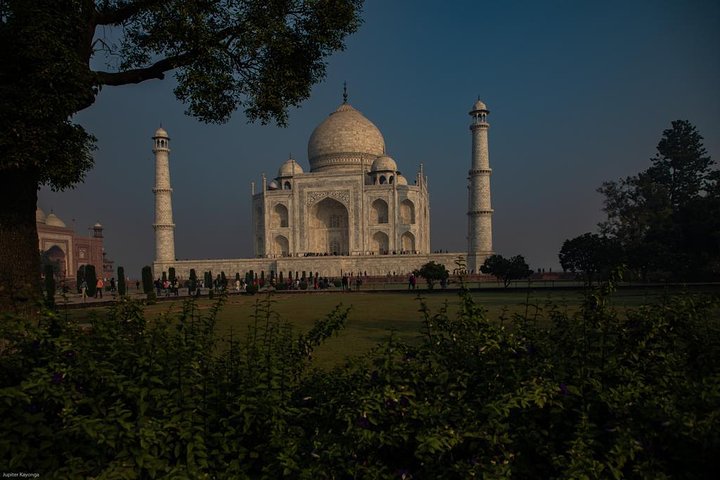
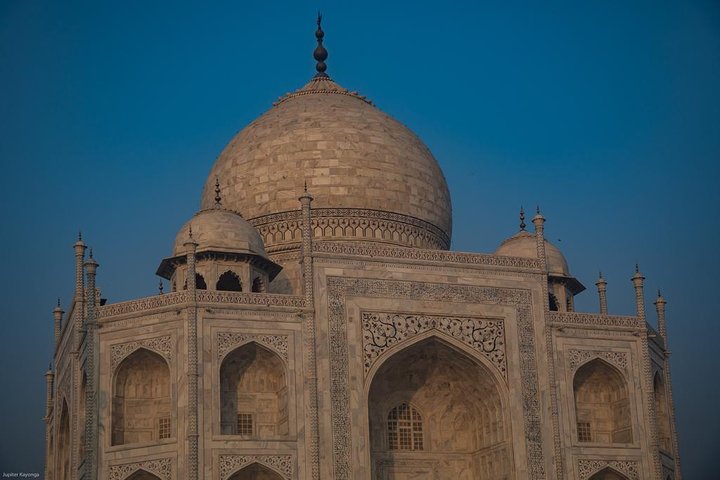
- Taj Mahal - The Taj Mahal, built in the 17th century by Emperor Shah Jahan for his beloved wife, took 22 years to complete. As one of the Seven Wonders of the World, it is the most extravagant expression of love ever created. The Taj Mahal is best viewed in the early morning, shrouded in mist and bathed in a soft glow. Its vast marble surfaces change color with the sun, from soft grey and yellow to pearly cream and dazzling white, appearing milky white in the morning light. Witness the magical effects of the rising sun’s reflections.
- Qutub Minar - The Qutub Minar, also spelled Qutab Minar or Qutb Minar, is the world’s second tallest brick minaret. Part of the Qutab complex, a UNESCO World Heritage Site, it is a soaring 73-meter-high tower of victory, built by Qutab-ud-din Aibak after the defeat of Delhi’s last Hindu kingdom.
- Red Fort - The Red Fort, also known as Lal Qalʿah, Lal Kila, or Lal Qila, is a Mughal fort in Old Delhi, India. Built by Shah Jahan in the mid-17th century, it remains a major tourist attraction and was designated a UNESCO World Heritage site.
- Humayun’s Tomb - Humayun’s Tomb, or Maqbara-e-Humayun, is the resting place of Mughal Emperor Humayun in Delhi, India. Commissioned by his first wife and chief consort, Empress Bega Begum, it was designed by Persian architects Mirak Mirza Ghiyas and his son, Sayyid Muhammad. It is the first garden tomb in Asia and a heritage site.
- Friday Mosque (Jama Masjid) - The Masjid-i Jahān-Numā, commonly known as the Jama Masjid of Delhi, is one of India’s largest mosques. Constructed by Mughal Emperor Shah Jahan, it is now the second largest mosque on the Indian subcontinent and an impressive example of Mughal architecture.

- Bottled water
- Hotel/Airport/Railway Station Pick-up & Drop
- Professional Informative Tour Guide for Delhi, Agra & Jaipur Monuments
- Chauffeur Driven A/C Private Vehicle for sightseeing
- Bottled water
- Hotel/Airport/Railway Station Pick-up & Drop
- Professional Informative Tour Guide for Delhi, Agra & Jaipur Monuments
- Chauffeur Driven A/C Private Vehicle for sightseeing
- Accommodation / Hotels
- Personal Meal & Other Activity Expenses
- Monuments Entrance Fees / Camera Fees
- Driver’s and Guide’s Tips
- Accommodation / Hotels
- Personal Meal & Other Activity Expenses
- Monuments Entrance Fees / Camera Fees
- Driver’s and Guide’s Tips
This is an ideal 4-night, 5-day tour for travelers planning a brief visit to India, covering the enchanting cities of Delhi, Agra, and Jaipur.
Immerse yourself in India’s rich history and culture by exploring Agra’s UNESCO World Heritage sites, including the world-renowned Taj Mahal and Agra Fort. In Jaipur, famously known as the Pink City of Rajasthan,…
This is an ideal 4-night, 5-day tour for travelers planning a brief visit to India, covering the enchanting cities of Delhi, Agra, and Jaipur.
Immerse yourself in India’s rich history and culture by exploring Agra’s UNESCO World Heritage sites, including the world-renowned Taj Mahal and Agra Fort. In Jaipur, famously known as the Pink City of Rajasthan, discover grand palaces and hilltop forts while delving into India’s royal heritage. These cities provide a captivating look into the Mughal Empire and its impact on Indian society.
During this tour, you’ll also experience the charm of Delhi. In Delhi, you’ll visit landmarks such as the Red Fort, Humayun’s Tomb, and Qutub Minar.
Prepare for an unforgettable vacation with your loved ones.
- Children must be accompanied by an adult
- The duration of transfers are approximate, the exact duration will depend on the time of day and traffic conditions
- Please provide the lead traveler’s name, arrival port details and passport number,Flight Details, hotel details
- Please note that the Taj Mahal is closed every Friday
- Dress code is smart casual, Please be advised that short shorts or sleeveless tops are not recommended in the temple.
- A moderate amount of walking is involved please wear comfortable shoes
- A current valid passport is required on the day of travel for all participants
For a full refund, cancel at least 24 hours before the scheduled departure time.
For a full refund, cancel at least 24 hours before the scheduled departure time.