Exploring the Spiritual Tapestry of Jerash and Umm Qais
Embarking on a journey to Jerash, Umm Qais, and the Cave of Jesus, I sought to explore the rich tapestry of history and spirituality that these sites offer. Join me as I reflect on the profound connections between the past and present, and the spiritual insights gained along the way.


A Journey Through Time: Jerash
As I embarked on my journey to Jerash, often referred to as the Pompeii of the East, I was filled with anticipation. The city, with its well-preserved Roman ruins, promised a glimpse into a world long past. Walking through the Oval Plaza, I could almost hear the echoes of ancient footsteps, bustling with life and commerce. The grandeur of Hadrian’s Arch and the Temple of Artemis stood as testaments to the city’s historical significance, each stone whispering stories of a bygone era.
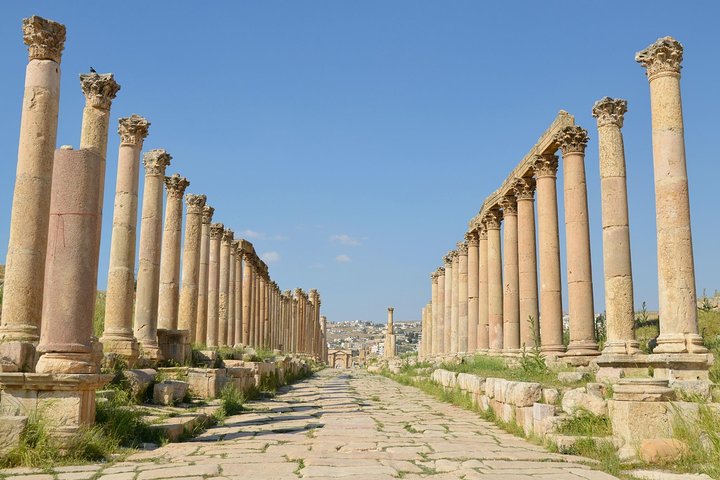
The colonnaded streets, lined with the remnants of fountains and temples, painted a vivid picture of the city’s past glory. As I wandered through these ancient pathways, I couldn’t help but reflect on the city’s journey through time—from its rise with the Greek federation to its endurance through Muslim and Christian rule, and its eventual fall during the Crusades. This reflection on history, intertwined with my own spiritual journey, deepened my appreciation for the resilience and continuity of human civilization.
The Panoramic Beauty of Umm Qais
Leaving Jerash, I traveled to Umm Qais, the ancient city of Gadara, perched dramatically on a hilltop. The panoramic views from this vantage point were nothing short of breathtaking, encompassing the Sea of Galilee, the Golan Heights, and the borders of Jordan, Syria, and Israel. It was a humbling experience to stand at the crossroads of three nations, each with its own rich tapestry of history and culture.
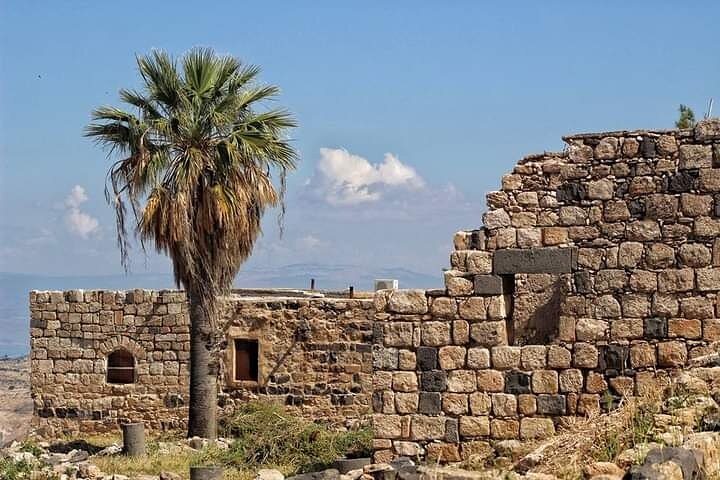
Exploring the ruins of the Roman amphitheater and the colonnaded streets, I was struck by the city’s significance as a center of Greek philosophy and medicine. The juxtaposition of Roman ruins with the abandoned Ottoman-era village added layers of historical depth to the site. As I stood there, I pondered the miracle of the Gadarene swine, a biblical event that added a spiritual dimension to my visit. This connection between the physical and the spiritual, the past and the present, resonated deeply with my own journey of faith and exploration.
The Enigmatic Cave of Jesus
The final leg of my journey took me to the Cave of Jesus, also known as the Cave of Issa, near Umm Qais. This site, believed by many Christians to have been a refuge for Jesus during his ministry, held a profound spiritual significance. However, the path to the cave was not without its challenges. As I made my way on foot, I was reminded of the physical demands of pilgrimage, a theme that has been a constant in my travels.
The path was steep, and the unexpected encounter with a herd of sheep and their protective dogs added an element of unpredictability to the journey. Yet, this experience, though daunting, was a reminder of the unpredictability of life and the importance of perseverance. The serenity of the cave and the surrounding hills offered a moment of reflection and peace, a fitting conclusion to a day filled with historical and spiritual exploration.
In sharing this journey with you, my dear readers, I hope to inspire a deeper connection with the places we visit and the stories they hold. Each site, each stone, is a testament to the enduring spirit of humanity and the shared journey we all undertake in search of meaning and understanding.