Exploring the Soul of Jerusalem: A Self-Guided Pilgrimage
Embark on a journey through the heart of Jerusalem, where history and spirituality intertwine. Discover how a self-guided tour, enriched by the insights of a master guide, transformed my exploration into a personal pilgrimage.


A Journey Through Time and Spirit
As I embarked on the Classic Jerusalem Tour, I was filled with anticipation. Jerusalem, a city that has been a focal point of spiritual and historical significance for millennia, was about to unfold before me. The self-guided nature of the tour allowed me to explore at my own pace, a feature that resonated deeply with my scholarly background. The journey began at the Jaffa Gate, the entry point to the Old City, where the ancient stones seemed to whisper tales of the past.
The Tower of David Museum was my next stop, a place where history and spirituality intertwine. Standing atop the ancient citadel, I gazed upon a 360-degree view of the old and new city. It was here that I felt a profound connection to the past, imagining the trial of Jesus that might have taken place on these very grounds. The museum’s exhibits, rich with artifacts and stories, offered a glimpse into the complex tapestry of Jerusalem’s history.
As I moved through the city, I was reminded of the words of Uri Goldflam, the master guide whose insights had shaped this tour. His ability to weave together biblical history, geography, and modern affairs was evident in every step I took. Uri’s influence was palpable, guiding me through the intricate layers of Jerusalem’s soul.
The Heart of Jerusalem
Mount Zion was a place of reflection and reverence. Here, I visited the Dormition Abbey, the Upper Room, and the traditional tomb of King David. Each site held its own spiritual significance, inviting me to pause and contemplate the rich history that surrounded me. The Upper Room, in particular, resonated with me as a scholar of Islamic studies, as it is a place of convergence for many faiths.
The Roman Cardo, a remnant of Jerusalem rebuilt by Emperor Hadrian, was a testament to the city’s resilience. Walking on the ancient Roman pavement, I felt a connection to the countless pilgrims who had traversed these paths before me. The Broad Wall, mentioned in the Bible, stood as a silent witness to the passage of time, a relic of a bygone era.
Uri’s guidance, though not physically present, was felt in the curated content of the tour. His openness to exploring difficult questions and his respect for diverse perspectives enriched my journey, transforming it into a personal pilgrimage. It was not just about seeing the sites; it was about understanding the soul of the land and its people.
A Tapestry of Faith and History
The Herodian Quarter and Wohl Archaeological Museum offered a glimpse into Jerusalem’s first-century life. The excavations revealed massive homes and decorations, evidence of the city’s grandeur before its destruction by the Romans in 70 AD. It was a poignant reminder of the city’s turbulent history, a narrative that continues to shape its present.
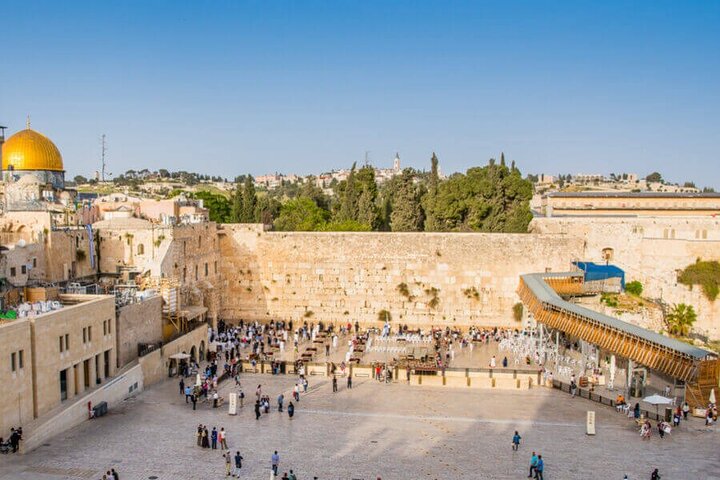
The Western Wall, a remnant of the Temple in Jerusalem, was a place of prayer and reflection. As I stood before it, I felt a deep sense of connection to the countless individuals who had come here seeking solace and guidance. The Church of the Holy Sepulchre, built on the traditional location of the crucifixion and resurrection of Jesus Christ, was a place of profound spiritual significance.
This journey through Jerusalem was more than a tour; it was an exploration of faith, history, and the human spirit. Uri Goldflam’s influence, though subtle, was a guiding force, helping me to see beyond the stones and into the heart of the city. As I left Jerusalem, I carried with me not just memories, but a deeper understanding and a challenged heart, eager to continue my exploration of the Middle East.