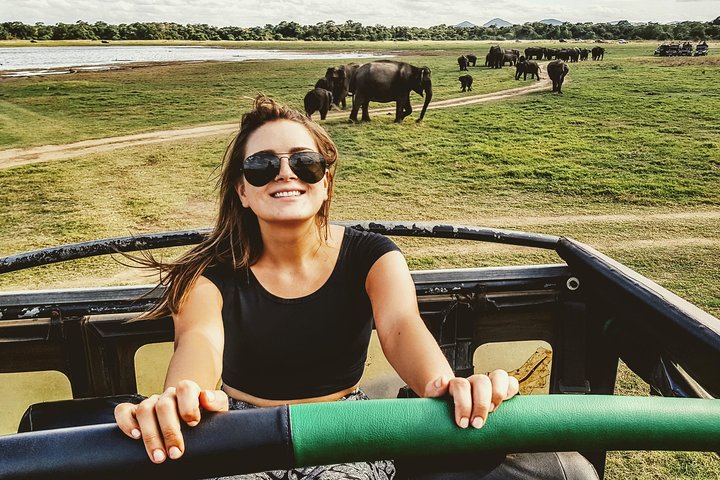
Greetings (Ayubowan) upon your arrival from the Airport / Colombo / Negombo. Our driver is ready to customize your tour according to your preference. This tour offers you the opportunity to discover incredible locations in and around your vicinity as much as you desire.
Greetings (Ayubowan) upon your arrival from the Airport / Colombo / Negombo. Our driver is ready to customize your tour according to your preference. This tour offers you the opportunity to discover incredible locations in and around your vicinity as much as you desire.
KANDY
Temple of the Sacred Tooth Relic - The Temple of the Sacred Tooth, with its golden roof, is home to Sri Lanka’s most significant Buddhist relic—a tooth of the Buddha. During puja (offerings or prayers), the room where the tooth is kept is open to devotees and tourists, although the tooth itself is not visible. It is stored in a gold casket…
KANDY
Temple of the Sacred Tooth Relic - The Temple of the Sacred Tooth, with its golden roof, is home to Sri Lanka’s most significant Buddhist relic—a tooth of the Buddha. During puja (offerings or prayers), the room where the tooth is kept is open to devotees and tourists, although the tooth itself is not visible. It is stored in a gold casket shaped like a dagoba (stupa), which contains a series of six smaller dagoba caskets. In addition to the main temple, the complex features several smaller temples, shrines, and museums.
Royal Botanical Gardens - The Peradeniya Royal Botanical Gardens, the largest and finest of its kind in Asia, are ideally situated in Kandy’s Mediterranean climate, the gateway to the Central Highlands. At an elevation of 500 meters above sea level, the gardens are encircled on three sides by a loop of the Mahaweli River, Sri Lanka’s largest river.
Kandy View Point - Ascend the hill by Kandy Lake to reach the Kandy viewpoint, offering an unbeatable view of the city. As a popular tourist destination, the area attracts many vendors, though their goods may not always be of the highest quality. The area is also known for pickpocketing, so visitors should remain vigilant. From the hill, enjoy stunning views over the lake and the city.
Kandy Lake - Kandy Lake, also known as Kiri Muhuda or the Sea of Milk, is an artificial lake in the heart of Kandy, Sri Lanka, constructed in 1807 by King Sri Wickrama Rajasinghe next to the Temple of the Tooth. Over time, its size has been reduced. It is a protected lake where fishing is prohibited. Many legends surround the lake, including one about the small island at its center, which was used by the king’s harem for bathing and was connected to the palace by a secret tunnel.
New Ranweli Spice Garden - Explore the Ranweli Spice Garden to experience various spices and herbs, offering insight into the island’s rich spice history. Wander through the pristine, green garden to see how herbs grow naturally, and learn how to use them to enhance the flavor of specialty dishes. These spices reveal the secrets of traditional Sri Lankan cuisine, known for its nutritional value and delicious taste.
Kandy - Kandy is a vast city in central Sri Lanka, set on a plateau surrounded by mountains that are home to tea plantations and biodiverse rainforests.
NUWARA ELIYA
Gregory Lake - Gregory Lake was created in 1873 by the British-era Governor Sir William Gregory, initially intended for electricity generation. However, it became primarily a leisure and recreational spot. At its peak, Gregory Lake was the area’s most prominent attraction, offering relaxation to many visitors.
Shri Bhakta Hanuman Temple - The Shri Bhakta Hanuman Temple, built by the Chinmaya Mission of Sri Lanka, is located in Ramboda on the Kandy-Nuwara Eliya Road, approximately 30 kilometers north of Nuwara Eliya on the A-5 route, facing the Kotmale Reservoir. The Chinmaya Mission is a Hindu spiritual organization dedicated to spreading Vedanta, the science of the self as explained in the Vedas, particularly the Upanishads, and other significant Hindu scriptures, including the Bhagavad Gita.
Victoria Park of Nuwara Eliya - This is one of the country’s most beautiful and well-maintained town parks. A walk along its paths, past manicured lawns, is delightful. The park bursts into bloom from March to May and in August and September. It is also home to several hill-country bird species, including the Kashmir flycatcher, Indian pitta, and grey tit.
Shanthipura View Point - On the slopes of the majestic Kikiliyamana, Sri Lanka’s fifth-highest mountain, lies the village of Shanthipura. This is the highest village on the island, located at an altitude of 7,339 feet on the Kikiliyamana Mountain road from Nuwara Eliya. Upon reaching Shanthipura, visitors are welcomed by a small but beautiful Buddhist pagoda at the village’s highest point, surrounded by houses at varying altitudes. Visitors can also observe the villagers’ lifestyles and their unique farming methods on the slopes.
Nuwara Eliya - Nuwara Eliya is a city in the tea country hills of central Sri Lanka. The naturally landscaped Hakgala Botanical Gardens showcase roses and tree ferns and are home to monkeys and blue magpies. Nearby, the Seetha Amman Temple, a colorful Hindu temple, is adorned with religious figures.
SIGIRIYA - DAMBULLA
Sigiriya - Rising dramatically from the central plains, the enigmatic rocky outcrop of Sigiriya is perhaps Sri Lanka’s most striking sight. Near-vertical walls ascend to a flat-topped summit containing the ruins of an ancient civilization, believed to be the center of the short-lived kingdom of Kassapa. The site offers breathtaking views across mist-covered forests in the early morning.
Sigiriya Museum - This impressive museum features a detailed diorama of the site, providing an excellent overview and explaining Sigiriya’s cultural significance beyond its natural beauty. The museum presents the theory that Sigiriya was a Buddhist monastery, although the prevailing view is that it was a palace or fortress.
Golden Temple of Dambulla - The Rock Temple of Dambulla, known as Jumbukola Vihara (Dambulla Cave Temple) in the Mahavamsa—the principal Pali Chronicle of Sri Lanka—is located about 47 miles northwest of Kandy, the last capital of the Sinhalese kings, on the main road to Anuradhapura. Dambulla is a site of unique interest, with its rock temples being the most extensive on the island and among the most ancient, in excellent preservation and order.
Dambulla Dedicated Economic Centre - Situated in the Dambulla Secretariat Division of Matale District, in the heart of Dambulla town, this center was established in 1999 as a wholesale market for vegetables and fruits. A key feature of the DDEC is the direct participation of farmers in selling their produce.
Sigiriya - Referred to by locals as the Eighth Wonder of the World, this ancient palace and fortress complex holds significant archaeological importance and attracts thousands of tourists annually. It is likely the most visited tourist destination in Sri Lanka.
GALLE
Galle Fort - The Galle Fort, also known as the Dutch Fort, is a fortification initially built by the Portuguese on Sri Lanka’s southwestern coast. The original fortifications, constructed in the late 16th century, were quite basic. According to UNESCO, the site is recognized as a World Heritage Site for its unique display of an urban ensemble illustrating the interaction of European architecture and South Asian traditions from the 16th to the 19th centuries, meeting the criteria for such recognition.
Galle Fort Lighthouse - The Galle Lighthouse is located within the historic Galle Fort. It is built seven meters above the road on the ramparts. This is Sri Lanka’s oldest light station, dating back to 1848, although the original lighthouse was destroyed by fire in 1934. It was rebuilt to its current height of 26 meters. The light station is within the walls of the ancient Galle Fort, a UNESCO World Heritage Site and popular tourist attraction, making it the country’s most frequently visited lighthouse.
Dutch Hospital Shopping Precinct - Situated in Galle, the Dutch Hospital Shopping Precinct, as the name suggests, is a shopping mall housed in a beautifully restored colonial building originally constructed during the Dutch occupation. It offers a growing selection of places to eat, drink, or shop, with fabulous bay views from its upper balcony.
Old Town of Galle and its Fortifications - Today’s town has expanded significantly, spreading into the surrounding areas, but the Fort remains the heart of Galle’s history. The walled city has stood since the early 16th century, through the colonial periods of the Portuguese, Dutch, and British, and is now proclaimed an Archaeological Reserve and recognized as a living World Heritage Site. The name Galle is believed to be an altered form of the Sinhalese word “gala,” meaning a cattle fold or posting place, from which the Portuguese named it Point-de-Galle.
Galle - A UNESCO World Heritage Site, this historic city is a delight to explore on foot, with its exotic old trading port featuring imposing Dutch colonial buildings, ancient mosques and churches, grand mansions, and museums.
ANURADHAPURA
Mihintale - Mihintale Mountain, with the arrival of Buddhism in Sri Lanka, became a residential area for venerable monks led by Arahath Mahinda Mahathera. With royal patronage, the sanctuary soon housed numerous monastic buildings—stupas, uposathgharas, Bodhidharma—to serve the monks. Sixty-eight cave dwellings provided shade and shelter for the monks. Mihintale, a sanctuary for thousands of laypeople and holy men, offered all the facilities and amenities for basic living.
Ruwanwelisaya - As the oldest stupa in Sri Lanka, Ruwanwelisaya is considered an icon of architectural glory in ancient Sri Lanka. Ruwanwelisaya, standing proudly in Anuradhapura, is a top sacred site for Buddhists. It bears witness to the incomparable service of reviving Buddhism in the country. Located just a short walk from the Maha Bodhi tree in Anuradhapura, the stupa is one of the eight places of veneration believed to have been visited by Buddha during his three visits to Sri Lanka.
Jethawanaramaya Stupa - Jethawana Stupa is the largest stupa in Sri Lanka. Originally 400 feet (122 meters) in height, it was the third tallest building in the world at that time. Even today, as a brick monument, Jethawanaramaya remains the tallest of its kind in the world.
Jaya Sri Maha Bodhi - Jaya Sri Maha Bodhiya of Anuradhapura, Sri Lanka, is the oldest living tree in documented history. It is a sapling from the historical Bodhi tree under which Buddha attained enlightenment. Planted in 288 BCF, it is the oldest living human-planted tree in the world with a known planting date. It was brought from Buddhagaya, India, by Ven. Sanghamitta Therini, a sister of Arhant Mahinda, who introduced the Buddha’s teachings to Sri Lanka.
Anuradhapura - Anuradhapura, a Ceylonese political and religious capital that thrived for centuries, was abandoned after an invasion in 993. Hidden away in dense jungle for many years, the magnificent site, with its palaces, monasteries, and monuments, is now accessible once again.

- Tour begins and concludes in Colombo or Airport.
- Complimentary WiFi access during travel (subject to availability).
- Service of an English-speaking chauffeur guide (accompanies to most sights).
- Standard air-conditioned vehicle with fuel for 750km over the 5-day tour.
- Chauffeur guide accommodations included.
- Tour begins and concludes in Colombo or Airport.
- Complimentary WiFi access during travel (subject to availability).
- Service of an English-speaking chauffeur guide (accompanies to most sights).
- Standard air-conditioned vehicle with fuel for 750km over the 5-day tour.
- Chauffeur guide accommodations included.
- Entry Visa Fees
- Overnight Hotel Accommodations.
- Cost of Food and Beverages.
- Any expenses of personal nature.
- Gratuities & Portages.
- Entrance fees
- Entrance fees
- Entry Visa Fees
- Overnight Hotel Accommodations.
- Cost of Food and Beverages.
- Any expenses of personal nature.
- Gratuities & Portages.
- Entrance fees
- Entrance fees
- Vehicle usage starting from 2nd day 08:30AM to 06:30PM
- An additional driver charge USD 8 would be applicable in case vehicle has to leave garage before 07:00 AM or Reaches after 09:00PM.
- All visitors to Buddhist and Hindu temples are expected to remove footwear and hats. Also shoulders and knees should be covered
- The duration of transfers are…
- Vehicle usage starting from 2nd day 08:30AM to 06:30PM
- An additional driver charge USD 8 would be applicable in case vehicle has to leave garage before 07:00 AM or Reaches after 09:00PM.
- All visitors to Buddhist and Hindu temples are expected to remove footwear and hats. Also shoulders and knees should be covered
- The duration of transfers are approximate, the exact duration will depend on the time of day and traffic conditions
- A current valid passport is required on the day of travel
- Subject to favorable weather conditions. If canceled due to poor weather, you will be given the option of an alternative date
- Mandatory to complete 14 days of quarantine for unvaccinated passengers before starting the tour.
- Vaccinated passengers should stay in Level 1 hotel once arrived in Sri Lanka and obtain negative PCR report, in order to start the tour. (14 Days of quarantine is not required).
For a full refund, cancel at least 24 hours before the scheduled departure time.
For a full refund, cancel at least 24 hours before the scheduled departure time.