A Pilgrimage Through Kathmandu’s Timeless Heritage
Embark on a journey through Kathmandu’s rich cultural tapestry with the UNESCO World Heritage Tour. Discover the spiritual and historical heart of Nepal in a single day, guided by local experts.


A Day of Discovery: The Heart of Kathmandu
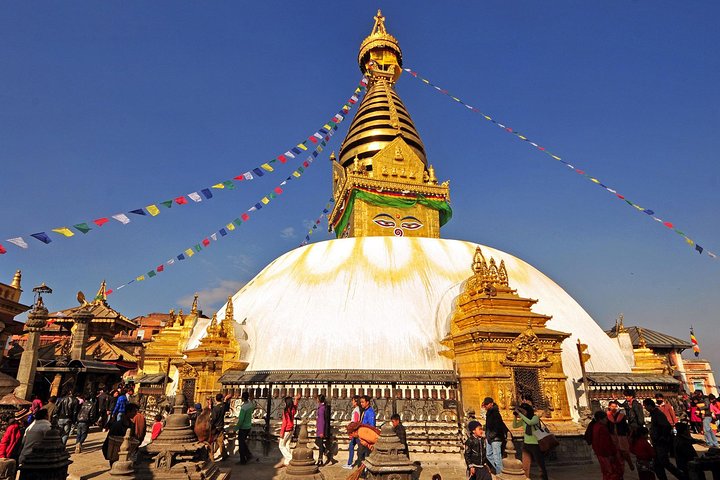
As I embarked on the UNESCO World Heritage Tour in Kathmandu, I was filled with anticipation. The allure of exploring seven UNESCO World Heritage Sites in a single day was irresistible. My guide, Pankaj, and our driver were not just facilitators of this journey; they were custodians of the rich tapestry of history and culture that awaited us. Our first stop was the Swayambhunath Stupa, affectionately known as the Monkey Temple. Climbing the 365 steps to the top, I was greeted by the sight of the golden Vajra and the serene eyes of Buddha gazing over the city. The air was filled with the scent of incense and the sound of prayer wheels spinning, a sensory symphony that set the tone for the day.
The journey continued to Kathmandu Durbar Square, where the echoes of history resonated through the ancient architecture. The Kumari Ghar, home to the living goddess, was a highlight, and witnessing the Kumari appear was a moment of profound cultural significance. The square was alive with the vibrant energy of locals and visitors alike, a testament to the enduring spirit of this historic site. As we moved to Patan Durbar Square, the intricate Newari architecture and the palace museum offered a deep dive into the local Hindu and Buddhist culture. The museum’s exhibits were a window into the past, each artifact telling a story of the region’s rich heritage.
Spiritual Encounters: Stupas and Temples
The Bouddhanath Stupa was our next destination, its massive dome and the fluttering prayer flags creating a mesmerizing sight. The stupa’s wisdom eyes seemed to follow us, a reminder of the spiritual depth of this sacred place. Here, the devotion of the worshippers was palpable, their prayers a silent dialogue with the divine. The Pashupatinath Temple, with its sprawling complex of shrines and temples, was a place of profound spiritual energy. As the sun began to set, we witnessed the sacred cremation practices along the banks of the Bagmati River. It was a deeply moving experience, a reminder of the cycle of life and death that is central to Hindu belief.
The presence of sadhus, with their ash-covered bodies and matted hair, added to the temple’s mystical aura. These holy men, living embodiments of renunciation, were a living link to the ancient traditions that continue to thrive in Nepal. The sacred cows and bulls roaming freely were a testament to the reverence for life that is a cornerstone of Hindu culture. Each moment at Pashupatinath was a lesson in mindfulness, a call to be present and to honor the sacred in the everyday.
A Journey Through Time: Bhaktapur and Beyond
Our journey took us to Bhaktapur Durbar Square, a city that seemed frozen in time. The 55-window palace and the towering Nyatapola Temple were architectural marvels, each stone a testament to the skill and artistry of the Newar craftsmen. The city’s narrow streets were alive with the sounds of daily life, a vibrant tapestry of color and culture. The Changu Narayan Temple, perched on a hilltop, was our final stop. Surrounded by Champak trees, the temple’s intricate carvings and statues were a fitting end to a day of discovery.
As we made our way back to the city, I reflected on the day’s journey. The UNESCO World Heritage Tour had been more than just a tour; it was a pilgrimage through the heart of Kathmandu, a journey that had touched my soul. Pankaj’s knowledge and passion had brought each site to life, and his willingness to let us linger in places that resonated with us made the experience truly personal. This day in Kathmandu was a reminder of the power of travel to connect us to the past, to each other, and to the world around us. Namaste.