Exploring the Sacred Depths of Mt. Koya: A Cultural Odyssey
Drawn by the allure of Mt. Koya’s sacred history, I embarked on a journey to explore this UNESCO World Heritage Site. Guided by the knowledgeable Yuki, I delved into the spiritual and cultural richness of Koyasan, discovering the harmony between nature and spirituality.




A Journey to the Heart of Shingon Buddhism
As I embarked on my journey to Mt. Koya, I was filled with a sense of anticipation and reverence. This sacred mountain, a UNESCO World Heritage Site, is a place where the ancient and the modern coexist in harmony. My guide, Yuki, was instrumental in making this experience both enlightening and seamless. Her knowledge of Koyasan’s history and her passion for sharing it with others was evident from the moment we met at Koyasan station.
The journey to Mt. Koya itself was an adventure. The train ride from Osaka, though lengthy, was a time for reflection and preparation. Yuki had been in touch with me prior to the tour, ensuring I had all the necessary information about train schedules and ticket purchases. Her guidance made the transition from the bustling city to the serene mountain smooth and stress-free.
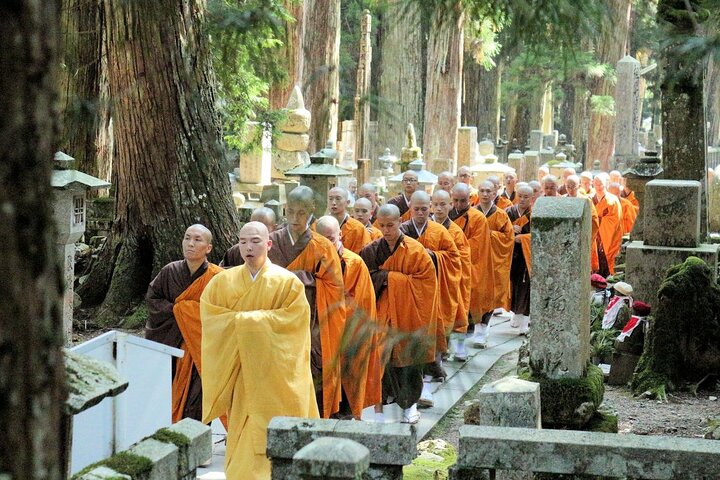
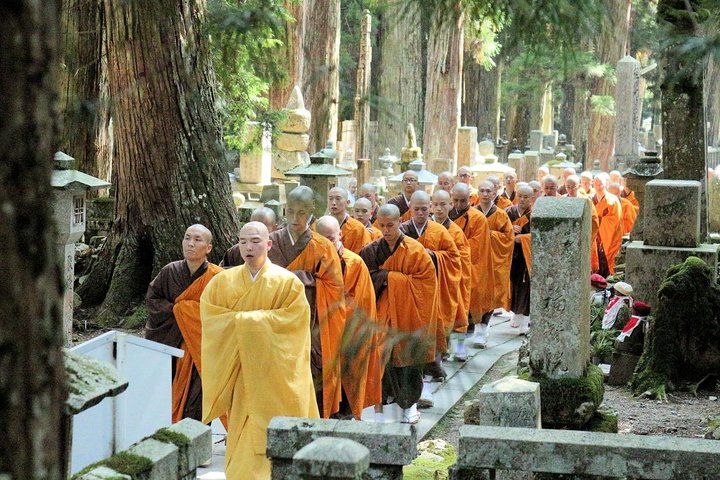
Upon arrival, the crisp mountain air and the sight of towering trees set the stage for a day of exploration and learning. The first stop on our itinerary was the Koyasan Okunoin, the heart of Mt. Koya. Walking through the forest, surrounded by the graves of historical figures, I felt a deep connection to the past. Yuki’s stories about Kobo Daishi, the founder of Shingon Buddhism, and other prominent personalities brought the history of this sacred place to life.
Immersed in the Spiritual and Cultural Richness
The next part of our journey took us to the Kongobu-ji Temple, the main headquarters of the Shingon Sect. As we entered the temple, I was struck by the beauty of the fusuma sliding door paintings and the tranquility of the rock garden. Yuki explained the symbolism of the two dragons flying amongst the clouds, a representation of the spiritual journey that Mt. Koya offers to its visitors.
The Koyasan Danjo Garan was another highlight of the tour. This sacred area, with its nearly twenty different structures, is where Kobo Daishi began his work in the 9th century. The Konpon Daito, a magnificent pagoda, stood as a testament to the dedication and vision of its founder. Yuki’s explanations of the meanings behind these structures added depth to my understanding of Shingon Buddhism and its teachings.
As we moved through the sites, I was continually amazed by the seamless blend of nature and spirituality. The Reihokan Museum, with its collection of religious art and artifacts, offered a glimpse into the rich cultural heritage of Koyasan. The mandalas and statues on display were not just works of art but also tools for meditation and reflection.
A Day of Reflection and Connection
The final part of our tour took us to the Tokugawa Mausoleum, a place of historical significance and architectural beauty. The intricate carvings and rich ornamentation of the mausoleum buildings were a reminder of the legacy of the Tokugawa shoguns and their connection to Koyasan.
Throughout the day, Yuki’s guidance and insights made the experience truly memorable. Her ability to weave together the historical, cultural, and spiritual aspects of Mt. Koya allowed me to fully immerse myself in the experience. As we concluded our tour, I felt a sense of peace and fulfillment, knowing that I had not only visited a place of great historical importance but had also connected with the deeper spiritual essence of Koyasan.
The journey back to Osaka was a time for reflection on the day’s experiences. The memories of the temples, the stories of the past, and the serene beauty of the mountain stayed with me long after I left. Mt. Koya is not just a destination; it is a journey into the heart of Japan’s spiritual and cultural heritage. For those seeking a deeper understanding of Japan’s rich traditions, a visit to Mt. Koya is an experience not to be missed. Mt. Koya Tour