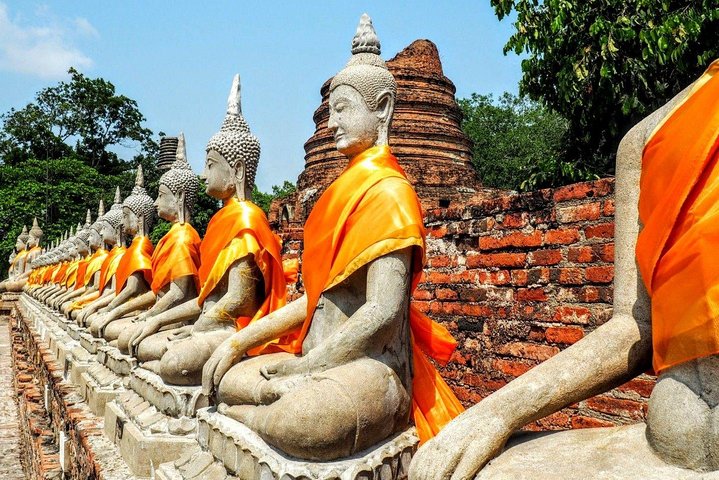
Exploring Thailand’s Timeless Treasures: A Cultural Odyssey
Eager to explore Thailand’s rich cultural tapestry, I embarked on the Lopburi Monkey Temple tour. From Ayutthaya’s majestic ruins to Lopburi’s enigmatic temples, the journey was a profound exploration of history and heritage.


A Journey Through Time: Ayutthaya’s Majestic Ruins
As I embarked on the Lopburi Monkey Temple tour, I was filled with anticipation. The allure of exploring Thailand’s rich history and cultural heritage was irresistible. Our journey began in Ayutthaya, a city that once stood as the thriving capital of Siam. The ruins here are nothing short of majestic, each stone whispering tales of a bygone era.
Our first stop was Wat Mahathat, a site renowned for its towering prang and the iconic Buddha head entwined in the roots of a Bodhi tree. This haunting yet mesmerizing sight embodies the passage of time and the resilience of spiritual heritage amidst the ravages of history. As I stood there, I couldn’t help but reflect on the deep cultural connections that bind us across time and space. The tranquility of the surroundings allowed for a moment of contemplation, a rare luxury in our fast-paced world.
Next, we visited Wat Phra Si Sanphet, a testament to the grandeur of the ancient Siamese capital. The three imposing chedis, adorned with intricate designs, once housed the ashes of Ayutthaya’s kings. Walking through the well-preserved ruins, I marveled at the architectural splendor and the rich history that reflects the power and prestige of the Ayutthaya Kingdom. It was a humbling experience, reminding me of the impermanence of human endeavors and the enduring nature of cultural heritage.
The Colossal Beauty of Wat Muang
Leaving Ayutthaya, we ventured to Wat Muang in Wiset Chaichan. Here, I was awestruck by the colossal seated Buddha, one of the tallest in the world. The serene countenance of the Buddha exudes a sense of tranquility, drawing pilgrims and tourists alike to admire its magnificence.
The surrounding gardens and ornate temples create a serene atmosphere conducive to contemplation and spiritual reflection. As I wandered through the beautifully landscaped grounds, I felt a deep sense of peace and reverence. Wat Muang serves not only as a place of worship but also as a symbol of reverence and devotion, inviting visitors to marvel at the union of faith and artistic expression.
Our guide, Mr. Geng, shared fascinating insights into the history and significance of the site. His knowledge and passion for the cultural heritage of Thailand enriched the experience, making it all the more memorable. The timing of our visit was perfect, allowing us to explore the site without the usual crowds, adding to the sense of serenity and introspection.
Lopburi’s Enigmatic Monkey Temple
Our final destination was Lopburi, a city steeped in history and known for its mischievous monkey inhabitants. However, as our guide explained, local politics had decimated the monkey population, leaving only a few to roam the streets. Despite this, the Phra Prang Sam Yot remains a captivating archaeological site, showcasing a unique blend of Khmer and Lopburi architectural styles.
The three imposing prangs, adorned with intricate carvings, stand as a testament to the region’s rich historical and cultural heritage. Originally dedicated to the Hindu god Shiva, the temple later underwent conversion to a Buddhist monastery. As I explored the site, I was struck by the layers of history and the stories embedded in the ancient stones.
Lunch was a delightful affair at a quaint cafe set in its own grounds, where I savored a delicious beef curry dish. The journey back to Bangkok was long, with traffic queues due to ongoing road repairs, but the memories of the day’s adventures lingered in my mind. This tour was a profound reminder of the beauty and complexity of Thailand’s cultural tapestry, a journey through time that left me with a deeper appreciation for the region’s rich history and vibrant culture.