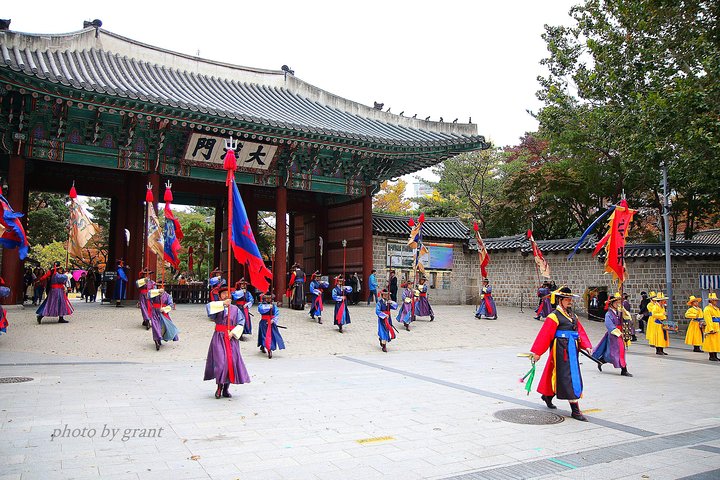
Experience the beauty of Korea’s fall foliage on this 11-day tour. Stay in premium 4-star downtown hotels and explore the country’s most stunning sights with a knowledgeable guide.
Experience the beauty of Korea’s fall foliage on this 11-day tour. Stay in premium 4-star downtown hotels and explore the country’s most stunning sights with a knowledgeable guide.
Arrival at ICN Airport - Seoul (Incheon)
Incheon International Airport - A tour guide will be waiting with a sign to greet you. They will then escort you to your hotel in downtown Seoul.
Seoul ✈ - Jejudo Island
Yongduam Rock - Located north of Jeju City, Yongduam was formed by strong winds and waves over millennia. There are many legends…
Arrival at ICN Airport - Seoul (Incheon)
Incheon International Airport - A tour guide will be waiting with a sign to greet you. They will then escort you to your hotel in downtown Seoul.
Seoul ✈ - Jejudo Island
Yongduam Rock - Located north of Jeju City, Yongduam was formed by strong winds and waves over millennia. There are many legends about its origin. One tale tells of a dragon stealing jade from Mt. Halla, shot down by the mountain deity, with its head freezing as it looked skyward. Another story speaks of a white horse aspiring to become a dragon, caught by a soldier, and turning into the rock.
From Yongduam, visitors can observe Haenyeo women divers collecting seafood. Nearby, there are numerous cafes, bars, and restaurants. The coastal road between Aewol-eup and Yongduam is a favorite for couples. Cafes and seafood restaurants have emerged over the past five years, creating a charming café village.
Enjoy a coffee at the village café and drive along the scenic coast to discover Iho Beach, where black rocks contrast with the emerald ocean, Hagwi Coast, and Aewol Port. Aewol Port features small seafood restaurants and fishing boats, enhancing the coastal drive. Further along is Hyeopjae Beach, one of Jeju Island’s most popular beaches, with its deep blue sea and white sand.
Jejudo Island
Sangumburi Crater - Sangumburi (산굼부리) is a crater over 2 km in circumference, designated as a Natural Monument. Located southeast of Jeju-si, it is a flat crater, about 650 meters wide, 100 meters deep, and 2,070 meters in circumference. From above, it resembles a man-made circular stadium. The crater hosts diverse plant life, with Nandaeseong vegetation like red-thorn and magnolia trees on the north side, and Ondaerim vegetation like evergreens and maples on the south side. The variety of flora attracts researchers.
Ilchul Land - A beautiful theme park featuring a flower garden, including a Bonsai Garden.
Seongsan Ilchulbong - Seongsan Ilchulbong Peak emerged from the sea in a volcanic eruption over 100,000 years ago. Located on Jejudo Island’s eastern end, it has a large crater at the top, about 600m in diameter and 90m high. Surrounded by 99 sharp rocks, it resembles a crown. The southeast and north sides are cliffs, while the northwest side is a grassy hill connected to Seongsan Village. The ridge is perfect for walks and horse riding.
The sunrise from the crater is breathtaking. In spring, Seongsan Ilchulbong Peak is surrounded by bright yellow canola flowers, creating a stunning view.
Jeju Haenyeo Museum - Haenyeo are female divers who gather shellfish and seaweed without underwater equipment. They use goggles, a tube for balance, and a basket for their catch. These women are found in Jeju-do, Korea, Japan, and Russia.
Jeju-do established the Jeju Haenyeo Museum to showcase the unique culture of Jejudo’s haenyeo divers. Exhibition Hall 1, “Haenyeo Diver’s Life,” features a traditional haenyeo home and meals, along with diving utensils. Exhibition Hall 2 displays haenyeo goggles, fishing spheres, and traditional outfits, along with historical records. Exhibition Hall 3, “The Sea,” showcases the fishing industry’s culture, with fishnets, equipment, and ship models.
The museum exhibits photos of haenyeo divers and their activities, providing insight into their lives. An observatory offers views of the Hado-ri area, with a garden and resting area. The first-floor lobby has a souvenir shop with haenyeo-related items.
Jeju Folklore & Natural Museum - This museum exhibits Jeju-do’s folklore and natural history materials, excavated and displayed since 1984.
The museum has four exhibition halls: the Natural History Hall, Folklore Exhibition HallⅠ, Folklore Exhibition HallⅡ, and the Outdoor Exhibition.
The Natural History Exhibition Hall features marine life, soil, rocks, and Jeju’s flora and fauna in a three-dimensional display, enhancing understanding of Jeju’s nature and culture. It includes an Ecology Hall of Marine Life, a Soil and Rock Exhibition Hall, and a Land Ecosystem Hall.
Folklore Exhibition Hall I showcases Jeju-do Island’s lifestyle transformation with 2,381 items, helping visitors understand ancient Jeju life through traditional housing, rites, and food specialties.
Folklore Exhibition HallⅡ displays Haenye diving gear and Jeju-do farming tools. The outdoor exhibition features 100 items, including traditional tools, ritual materials, and volcanic rock structures.
Mysterious Road (Dokkaebi Road) - The Mysterious Road on Jeju Island is known for its baffling phenomenon where objects appear to roll uphill. This optical illusion is due to the surrounding landscape, creating the appearance of an uphill slope.
The Mysterious Road is one of many magnetic hills worldwide. A slight downhill slope seems uphill due to the high surroundings, tricking the eyes.
Jejudo Island ✈- Busan, Hub of Asia
Yongdusan Park - Yongdusan Mountain (49m) in downtown Busan is one of Busan’s three famous mountains. Originally called Songhyeonsan Mountain, it was renamed Yongdusan Mountain due to its dragon-head shape (yongdu), symbolizing protection from foreign invaders.
The mountain once had shrines built by the Japanese before the 8.15 Liberation. Now, it hosts various monuments, including Cheokhwabi Monument, Chunghontap Pagoda, 4.19 Revolution Monument, a statue of Admiral Yi Sun-shin, and Busan Tower. During the Korean War, refugees built homes on the mountain, which were later destroyed by fire. Reforestation efforts transformed it into a beautiful park. Renamed Yongdusan Park after the April 19 Revolution in 1960, it offers stunning views of Busan Port and the surrounding scenery, especially at night from Busan Tower.
Busan Tower - Busan Tower, a symbol of Busan, stands 69 m above sea level at 120 m high. Its top is modeled after the Dabotap Pagoda in Bulguksa Temple, Gyeongju.
Beloved by locals and tourists, the tower offers a breathtaking night view and features the Statue of Admiral Yi Sun-sin, the Bell of the Citizens, a flower clock, and a bust of activist Baeksan An Hee-je.
Jagalchi Market - Jagalchi Market, located on Busan’s Jung-gu shoreside road, is Korea’s largest seafood market, selling live and dried fish. After the Korean War, it became a fish market. Most vendors are women, known as Jagalchi Ajumma, meaning middle-aged or married women in Korean.
This market is a Busan icon, famous nationwide. Visitors can enjoy fresh raw fish at the market. Women sell mackerel, sea squirts, and whale meat on wooden boxes along the road and shore.
Every October, the Jagalchi Cultural Tourism Festival is held. The market is easily accessible by subway, offering a glimpse into Busan locals’ lifestyle.
Busan-Jeonju, Walk Back in Time
Jeonju - The landmark of Korean culture.
Hanji Museum - Specializing in Korean Traditional Mulberry paper, this museum has 3,000 artifacts and a database documenting Hanji’s history and superiority. Visitors can experience making Korean paper with wooden tools and take it home.
Jeonju Hanok Village - The largest Korean village with various traditional cultural facilities in the downtown area.
Gyeonggijeon Shrine - A symbol of Jeonju’s Korean-style village, Gyeonggijeon is especially beautiful in autumn. Historical dramas and movies often use its landscape as a backdrop.
Jeonju Korean Traditional Wine Museum - This museum showcases tools and machines used in making Korean traditional wine. Visitors can explore the alcohol preparation and fermentation rooms, with speakers amplifying fermentation sounds.
Jeonju ➜ Seoul, Fashion and Technology-Forward but Also Deeply Traditional
Cookin’ NANTA (Myeongdong) - The longest-running show in Korean history, NANTA debuted internationally at the 1999 Edinburgh Festival Fringe, winning a best performance award. It has since been staged in 57 countries, including Off-Broadway in New York City.
Seoul ➜ Suwon ➜ Mt.Seoraksan, A Treat for Nature Lovers
Korean Folk Village - Located in Yongin city, visitors can explore life during the Joseon era. The village features a reproduced farmhouse, commoner’s house, government office, school, marketplace, and noble’s house (Yangban), offering a glimpse into Korea’s history.
Yangsu-ri Strawberry Farm Experience - Pick strawberries at the farm, enjoy eating them, and take 2kg home.
Seoraksan National Park - Known for its breathtaking views, the park is home to 2,000 animal species and over 1,400 rare plant species. Designated a UNESCO Biosphere Preservation District in 1982, it is Korea’s most famous national park. Autumn is the best time to visit.
Mt. Seoraksan
Gwongeumseong Fortress - Take a cable car to Gwongeumseong Castle and enjoy panoramic mountain views.
Sinheungsa Temple - Founded as Hyangseongsa Temple by Buddhist monk Jajang during Queen Jindeok’s reign in the Silla dynasty, it was rebuilt at its current location during King Injo’s reign in the Joseon dynasty after several fires.
Sinheungsa Temple - On the path to Sinheungsa, a great bronze statue stands over 10 meters high. Beyond the statue, on a granite terrace, is Hyeonsugyo Bridge, newly built for crossing the ravine.
Mt. Seoraksan ➜ Seoul, Embrace Traditional Korean Culture
Gyeongbokgung Palace - Experience the most representative edifices of the Joseon Dynasty, over 500 years old.
National Folk Museum of Korea - Discover Korea’s unique culture and people’s lifestyle in the past.
Museum Kimchikan - Join a Kimchi cooking class and make delicious kimchi with expert guidance. Take photos in traditional Korean Hanbok attire.
Dongdaemun Design Plaza (DDP) - Visit Dongdaemun Design Plaza, symbolizing Dream, Design, and Play. It hosts exhibitions, fashion shows, forums, conferences, and international events.
Free Day - Optional Tour DMZ
Paju - Enjoy a free day with an optional tour to the DMZ.
Seoul - ICN Airport ✈- Home
Incheon International Airport - After breakfast, enjoy last-minute shopping near the hotel in one of Seoul’s main shopping and tourism districts. If you haven’t found souvenirs during the journey, this is the perfect place to shop. In the evening, transfer to the airport for your return flight, concluding an unforgettable journey in Korea.

- Domestic airfare Seoul - Jeju-do - Busan
- Breakfast included
- All fees and taxes covered
- Domestic airfare Seoul - Jeju-do - Busan
- Breakfast included
- All fees and taxes covered
- Lunch and Dinner
- Lunch and Dinner
Accommodation: Carefully chosen 4-star hotels situated in the vibrant downtown area.
Tour Guide: Expertly selected licensed English-speaking guides who are enthusiastic, well-trained, and knowledgeable, ensuring a truly memorable experience.
Tour Condition: High-quality service, comfort, and hassle-free travel, without feeling rushed.
From…
Accommodation: Carefully chosen 4-star hotels situated in the vibrant downtown area.
Tour Guide: Expertly selected licensed English-speaking guides who are enthusiastic, well-trained, and knowledgeable, ensuring a truly memorable experience.
Tour Condition: High-quality service, comfort, and hassle-free travel, without feeling rushed.
From September to November, the mild autumn days offer the most delightful time of the year. Temperatures can vary significantly between day and night. The mountains, adorned with brilliant golden and red autumn leaves against a clear blue sky, are stunning. With a dedicated English-speaking guide and a private minivan, relax and take in Korea’s most breathtaking sights.
- Tour itinerary can be switched by flight schedule or situation caused.
For a full refund, cancel at least 24 hours before the scheduled departure time.
For a full refund, cancel at least 24 hours before the scheduled departure time.