Embark on a 4-day private tour to explore the best of Tokyo, Kamakura, Mt Fuji, Hakone, Nikko, and Yokohama. Customize your itinerary and enjoy the convenience of an experienced driver.
Embark on a 4-day private tour to explore the best of Tokyo, Kamakura, Mt Fuji, Hakone, Nikko, and Yokohama. Customize your itinerary and enjoy the convenience of an experienced driver.
Tokyo Day Trip
Senso-ji Temple - Sensoji (浅草寺, Sensōji, also known as Asakusa Kannon Temple) is a vibrant and popular Buddhist temple situated in Asakusa. It stands as one of Tokyo’s most colorful and well-visited temples.
According to legend, in 628, two brothers discovered a statue of Kannon, the goddess of mercy, in the Sumida River. Despite…
Tokyo Day Trip
Senso-ji Temple - Sensoji (浅草寺, Sensōji, also known as Asakusa Kannon Temple) is a vibrant and popular Buddhist temple situated in Asakusa. It stands as one of Tokyo’s most colorful and well-visited temples.
According to legend, in 628, two brothers discovered a statue of Kannon, the goddess of mercy, in the Sumida River. Despite returning the statue to the river, it continually came back to them. As a result, Sensoji was constructed nearby in honor of the goddess Kannon. The temple was completed in 645, making it Tokyo’s oldest temple.
Meiji Jingu Shrine - Meiji Shrine (明治神宮, Meiji Jingū) is dedicated to the deified spirits of Emperor Meiji and his consort, Empress Shoken. Located next to the bustling Harajuku Station on the JR Yamanote Line, Meiji Shrine and the adjacent Yoyogi Park form a large forested area within the densely built city. The expansive shrine grounds offer walking paths perfect for a leisurely stroll.
The shrine was completed and dedicated to Emperor Meiji and Empress Shoken in 1920, eight years after the emperor’s passing and six years after the empress’s passing. Although the shrine was destroyed during World War II, it was rebuilt shortly thereafter.
Shibuya Crossing - Shibuya (渋谷) is one of Tokyo’s 23 city wards, often referring to the bustling shopping and entertainment area around Shibuya Station. Shibuya is one of Tokyo’s most vibrant and busy districts, filled with shopping, dining, and nightclubs that attract numerous visitors daily.
Shibuya is a hub for youth fashion and culture, with its streets being the birthplace of many of Japan’s fashion and entertainment trends. The area is home to numerous department stores and shopping malls catering to all types of shoppers. Many of the large shopping complexes belong to either Tokyu or Seibu, two competing corporations.
Tsukiji - Tsukiji Outer Market (築地場外市場, Tsukiji Jōgai Shijō) is a district adjacent to the former Tsukiji Wholesale Market site. It comprises several blocks of wholesale and retail shops, as well as restaurants lining narrow lanes. Here, visitors can find fresh and processed seafood and produce alongside food-related goods such as knives.
A visit to Tsukiji Outer Market is best paired with a fresh sushi breakfast or lunch at one of the local restaurants. These restaurants typically open from 5:00 AM to around noon or early afternoon. Since most of the fish served and sold at Tsukiji Outer Market is delivered directly from Toyosu Market, it is one of the best places in Tokyo to enjoy fresh seafood.
Harajuku Bridge - Harajuku (原宿) refers to the area around Tokyo’s Harajuku Station, located between Shinjuku and Shibuya on the Yamanote Line. It is the center of Japan’s most extreme teenage cultures and fashion styles, but also offers shopping for adults and some historical sites of interest.
The focal point of Harajuku’s teenage culture is Takeshita Dori (Takeshita Street) and its side streets, which are lined with trendy shops, fashion boutiques, used clothing stores, crepe stands, and fast-food outlets catering to fashion and trend-conscious teens.
Mt Fuji Day Trip with Hakone
Oshino Hakkai - Oshino Hakkai (忍野八海) is a tourist-friendly set of eight ponds in Oshino, a small village in the Fuji Five Lake region, located between Lake Kawaguchiko and Lake Yamanakako on the site of a former sixth lake that dried out several hundred years ago. The eight ponds are fed by snowmelt from the slopes of nearby Mount Fuji, filtering down the mountain through porous lava layers for over 80 years, resulting in very clear spring water revered by locals.
Next to one pond, visitors can drink the cool water straight from the source. The ponds are quite deep and feature interesting freshwater plant life and large fish. Although the ponds have been developed into tourist attractions and can become quite crowded, they maintain a pleasant atmosphere as long as visitors do not expect untouched nature.
Oishi Park - The best place to see Mt. Fuji. Flowers bloom in profusion every season, and the scenery of the wide lake and magnificent view of Mt. Fuji are the unique charms of Oishi Park. Visitors will feel calm while strolling slowly along the promenade where flowers bloom, all while gazing at Mt. Fuji.
Owaku-dani Valley - Owakudani (大涌谷, Ōwakudani) is the area around a crater formed during the last eruption of Mount Hakone about 3,000 years ago. Today, much of the area is an active volcanic zone where sulfurous fumes, hot springs, and hot rivers can be experienced. Additionally, Owakudani offers excellent views of Mount Fuji on clear days.
Eggs cooked in Owakudani’s hot spring pools, with their shells blackened by the sulfur, are available for purchase at local shops. Eating one is said to extend one’s life by seven years.
Lake Ashinoko - Enjoy a pirate cruise on Lake Ashinoko. Lake Ashi, also known as Hakone Lake or Ashinoko Lake, is a scenic lake in the Hakone area of Kanagawa Prefecture in Honshū, Japan. It is a crater lake that lies along the southwest wall of the caldera of Mount Hakone, a complex volcano that last erupted in 1170 CE at Ōwakudani.
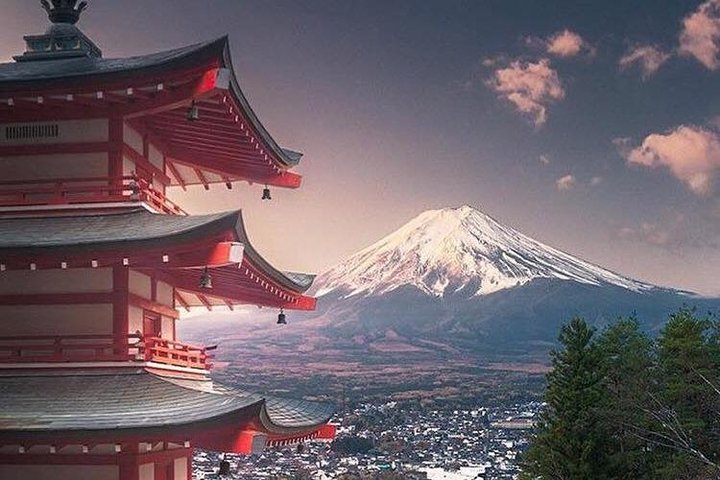
Arakurayama Sengen Park - A pagoda offering the best view of Mt. Fuji.
Mt. Fuji 5th Station - The last point accessible by car on Mt. Fuji.

- Entry to Mt Fuji
- Private Transportation
- Entry to Mt Fuji
- Private Transportation
- Meals
- Meals
With this trip, you can explore the area around Mt. Fuji or Hakone during the day. In the evening, your driver will take you to the 5th station for hiking. The next morning, after you finish your hike, your driver will pick you up from the 5th station and either drive you back to your hotel or take you on an 8-hour sightseeing tour of the Hakone area. We offer customizable options as well.
These trips are fully customizable.
With this trip, you can explore the area around Mt. Fuji or Hakone during the day. In the evening, your driver will take you to the 5th station for hiking. The next morning, after you finish your hike, your driver will pick you up from the 5th station and either drive you back to your hotel or take you on an 8-hour sightseeing tour of the Hakone area. We offer customizable options as well.
These trips are fully customizable.
For a full refund, cancel at least 24 hours before the scheduled departure time.
For a full refund, cancel at least 24 hours before the scheduled departure time.