

Escape the hustle and bustle of Tokyo on a full-day private walking tour of Nikko with a government-licensed guide. Customize your itinerary and explore this historic and beautiful town.
Escape the hustle and bustle of Tokyo on a full-day private walking tour of Nikko with a government-licensed guide. Customize your itinerary and explore this historic and beautiful town.
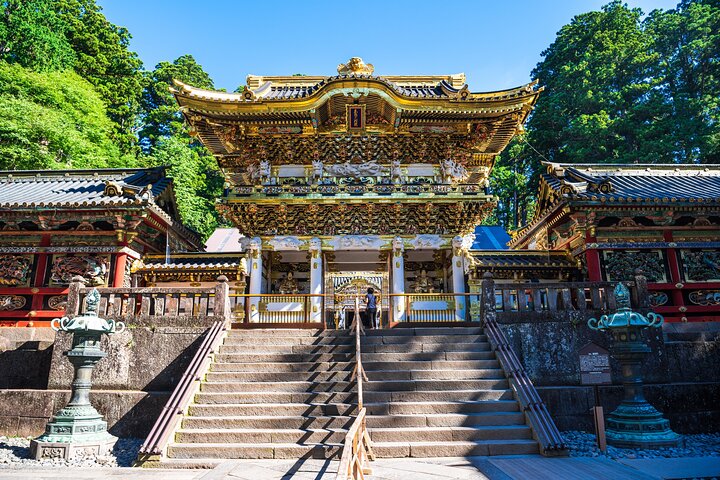
- Nikko Tosho-gu - Discover why the saying “Don’t say ‘magnificent’ until you’ve seen Nikko” holds true by visiting the final resting place of Tokugawa Ieyasu, the founder of the Tokugawa Shogunate, along with nearby shrines and temples. This renowned shrine, part of “the Shrines and Temples of Nikko,” a leading world heritage site in Japan, is…
- Nikko Tosho-gu - Discover why the saying “Don’t say ‘magnificent’ until you’ve seen Nikko” holds true by visiting the final resting place of Tokugawa Ieyasu, the founder of the Tokugawa Shogunate, along with nearby shrines and temples. This renowned shrine, part of “the Shrines and Temples of Nikko,” a leading world heritage site in Japan, is where the great Shogun Ieyasu Tokugawa, who initiated the prosperous Edo Period, is enshrined. The current shrine complex was reconstructed in the 17th century and includes 55 buildings, featuring 8 national treasures and 34 listed buildings. Highlights include exquisite carvings, lacquered and vibrantly colored, showcasing craftsmanship from across the country. Be sure to see the “Sleeping Cat,” a symbol of peace, and the “Three Monkeys” with their “see no evil, hear no evil, speak no evil” poses!
- Kegon Falls - Kegon Waterfall is the most famous among Nikko’s 48 waterfalls. Water from Lake Chuzenji plunges 97 meters straight down to the rocks below, creating a dynamic and artistic natural spectacle. A special lift takes visitors to the basin, where the force and roar of the water can be experienced up close! The waterfall is impressive in any season, but it is particularly stunning when surrounded by fresh green leaves in May, house martins in June, or the “12 falls”—small streams of the frozen waterfall clad in blue ice—during January and February.
- Lake Chuzenji - Lake Chuzenji is Tochigi’s largest lake, surrounded by 25 kilometers of breathtaking nature. In the late 19th to early 20th centuries, the area was a popular summer resort for foreigners. The villas of the French and Belgian embassies can still be found here. Visitors can enjoy the lake’s seasonal charms, with walking trails around the water’s edge and an excursion boat available. The views from the lake are spectacular, especially during cherry blossom or azalea blooms or when the autumn leaves are turning. The “Koyo-meguri” tour, which showcases autumn leaves reflecting on the lake, is highly recommended.
- Senjogahara Field - “Senjogahara” translates to battlefield, referring to a mythical battleground where legends say the gods of Mount Nantai and Mount Akagi once fought to claim the neighboring lakes. Taking the forms of a serpent and centipede, they battled and intertwined, creating this marshland. Today, the battlefield has transformed into a competition of charms, as various plants and fauna inhabit the vast field, captivating many visitors. A wooden trail spans the field, enhancing the serene atmosphere and complementing the colorful scene. Hike along the trail for a personal encounter with the plants and birds that visit the area, or head to the observation deck for a stunning panoramic view of the marshlands. Either way, prepare for a breathtaking sight you won’t regret!
- Taiyu-in Temple Hall - Taiyuin (大猷院, Taiyūin) is the mausoleum of the third Tokugawa shogun, Iemitsu, the grandson of Ieyasu. Iemitsu’s lavish mausoleum complex resembles the nearby Toshogu Shrine in layout and architecture, but it was intentionally built somewhat more modestly than Toshogu, due to Iemitsu’s deep respect for his grandfather. Taiyuin is Iemitsu’s posthumous name.
- Rinno-ji Temple - Rinnoji (輪王寺, Rinnōji) is Nikko’s most important temple. It was founded by Shodo Shonin, the Buddhist monk who introduced Buddhism to Nikko in the 8th century. The temple’s main building, the Sanbutsudo, houses large, gold-lacquered wooden statues of Amida, Senju-Kannon (“Kannon with a thousand arms”), and Bato-Kannon (“Kannon with a horse head”). These three deities are considered Buddhist manifestations of Nikko’s three mountain deities, enshrined at Futarasan Shrine. A decade-long renovation of the Sanbutsudo was completed in spring 2019.
- Nikko Tamozawa Imperial Villa Memorial Park - Tamozawa Imperial Villa (田母沢御用邸, Tamozawa Goyōtei) combines traditional Edo and early modern Meiji Period architecture throughout its 106 rooms. The villa was constructed in Nikko in 1899, using parts of a residence originally located in Tokyo. Before being moved to Nikko, the building initially served as the Tokyo residence of a Tokugawa family branch and was later temporarily used as the Imperial Palace. In Nikko, it was expanded into a summer residence and retreat for the Imperial Family but fell into neglect after World War II. In 2000, the villa was opened to the public following extensive renovations.
- Kanmangafuchi Abyss - Kanmangafuchi Abyss (憾満ヶ淵) was formed by an eruption of nearby Mount Nantai. This gorge near central Nikko is only a few hundred meters long and can be enjoyed from a pleasant riverside walking trail. Kanmangafuchi is also known for its row of about 70 stone statues of Jizo, a Bodhisattva who cares for the deceased. This particular group of Jizo statues is alternately called “Bake Jizo” (Ghost Jizo), “Narabi Jizo” (Jizo in a line), or “Hyaku Jizo” (100 Jizo). The statues overlook the river and the Nikko Botanical Garden, although the garden cannot be accessed from the abyss.
- Nikko Futarasan Shrine - Futarasan Shrine (二荒山神社, Futarasan Jinja) is located next to Toshogu in central Nikko. Much older than its more lavish neighbor, Futarasan Shrine was founded in 782 by Shodo Shonin, the Buddhist monk who introduced Buddhism to Nikko and also founded the nearby Rinnoji Temple. Futarasan Shrine is dedicated to the deities of Nikko’s three most sacred mountains: Mount Nantai, Mount Nyoho, and Mount Taro. Futarasan is an alternate name for Mount Nantai, the most prominent of the three mountains.
- Nikko Botanical Garden - Nikko Botanical Garden (日光植物園, Nikko Shokubutsuen) is owned and maintained by the prestigious University of Tokyo. It is a branch of the university’s main research garden, Koishikawa Botanical Garden in Tokyo. The garden was opened in 1902 to collect and study alpine plants. It is spacious and quiet, with a substantial network of paths for pleasant walks and viewing various labeled trees, plants, and shrubs. The garden also offers a view into the Kanmangafuchi Abyss, although there is no direct connection between the garden and the abyss.
- Shinkyo Bridge - The Shinkyo Bridge (神橋, Shinkyō, “sacred bridge”) stands at the entrance to Nikko’s shrines and temples and technically belongs to Futarasan Shrine. The bridge is ranked as one of Japan’s three finest bridges, alongside Iwakuni’s Kintaikyo and Saruhashi in Yamanashi Prefecture. The current Shinkyo was constructed in 1636, but a bridge of some kind had marked the same spot for much longer, although its exact origins are unclear. Until 1973, Shinkyo was off-limits to the general public. It underwent extensive renovations in the late 1990s and early 2000s, and visitors can now walk across the bridge and back for an entrance fee.
- Kirifuri Waterfall - Kirifuri Waterfall (霧降の滝, Kirifuri no taki) is an impressive, 75-meter-high, two-tiered waterfall located below the Kirifuri Highlands, a few kilometers northeast of Nikko’s temples and shrines. The sight of the elegant falls cascading down the mountain contrasts beautifully with the surrounding foliage, which is lush and green in spring and summer and displays fiery shades of red, orange, and gold in autumn. The name Kirifuri means “falling mist,” after the fine mist created when the water crashes against the rocks at the bottom of the lower falls. The view may occasionally be obscured when mist or fog covers the valley. It used to be possible to hike down to the base of the waterfalls, but the trail partially collapsed several years ago and has been closed since.
- Kanaya Hotel History House - The Kanaya Hotel History House (金谷ホテル歴史館, Kanya Hotel Rekishikan) is a historical building in Nikko that served as the predecessor of the celebrated Kanaya Hotel. The house is open for public exploration and provides a glimpse into the Nikko of centuries past. It stands next to a bakery that also sells admission tickets for the house. After Japan’s era of isolation ended, Nikko became a popular summer resort among foreign diplomats and business people who arrived in the country. The Kanaya Hotel has been one of the premier hotels in the area for accommodating such guests and today stands as the oldest Western-style hotel in Japan. While the hotel is now located one kilometer down the road on a hill above the Shinkyo Bridge, its history began at the Kanaya Hotel History House.
- Akechidaira Observation Area - The ropeway is closed for maintenance from January 16th, 2026, until August 31st, 2027. Located near the top of Irohazaka Slope, Akechidaira Plateau offers sweeping views over a winding road and a dramatic mountain backdrop. Take the ropeway up to the observation platform for even more panoramic views, including Kegon Falls and Lake Chuzenji. Alternatively, you can join a hiking trail that runs from the lake to the observation platform via Akechidaira Plateau.

- Meet up with guide on foot within designated area of Tokyo
- Licensed Local English Speaking Guide
- Customizable Tour of your choice of 3-4 sites from ‘What to expect’ list
- Meet up with guide on foot within designated area of Tokyo
- Licensed Local English Speaking Guide
- Customizable Tour of your choice of 3-4 sites from ‘What to expect’ list
- Transportation fees, Entrance fees, Lunch, and Other personal expenses
- Private transportation
- Transportation fee (for yourself), NIKKO PASS all area Ticket 4,520JPY per person
- You cannot combine multiple tour groups.
- Guide Entry fees are only covered for sights listed under What to Expect.
- Transportation fees, Entrance fees, Lunch, and Other personal expenses
- Private transportation
- Transportation fee (for yourself), NIKKO PASS all area Ticket 4,520JPY per person
- You cannot combine multiple tour groups.
- Guide Entry fees are only covered for sights listed under What to Expect.
This value-packed excursion with a government-licensed, experienced English-speaking tour guide offers a fantastic and efficient way to explore Nikko!
For those staying in Tokyo who wish to take a break and enjoy some sights outside the bustling city, this Nikko tour is ideal. There are numerous reasons why Nikko is a must-visit destination during a stay…
This value-packed excursion with a government-licensed, experienced English-speaking tour guide offers a fantastic and efficient way to explore Nikko!
For those staying in Tokyo who wish to take a break and enjoy some sights outside the bustling city, this Nikko tour is ideal. There are numerous reasons why Nikko is a must-visit destination during a stay in Japan. A private guide will assist in efficiently escaping the hustle and bustle of Tokyo on a full-day tour of this historic and beautiful town.
The guide will begin the day with a morning pickup at the hotel. Please share any special requests for the day, and the itinerary will be customized in advance!
Note*1: Please choose your must-see spots from a list in the tour information to create a personalized itinerary.
This tour is exclusively for groups of up to 10 people. Tour groups or reservations cannot be combined.
- This is a walking tour. Meet up is on foot.
For a full refund, cancel at least 24 hours before the scheduled departure time.
For a full refund, cancel at least 24 hours before the scheduled departure time.