

Experience the beauty of Japan’s traditional dress, the Kimono, in Tokyo Asakusa. Get dressed by a professional, have your hair done, and take a personalized city tour. Book now!
Experience the beauty of Japan’s traditional dress, the Kimono, in Tokyo Asakusa. Get dressed by a professional, have your hair done, and take a personalized city tour. Book now!
- Jidaiya - Jidaiya offers Japanese cultural experience programs for those looking for an enriching alternative to Asakusa sightseeing and for individuals desiring a deeper, more authentic Japanese experience. After dressing in a kimono, participants can embark on their tour. Please ensure the kimono is returned by 5pm.
- Asakusa - Asakusa is the…
- Jidaiya - Jidaiya offers Japanese cultural experience programs for those looking for an enriching alternative to Asakusa sightseeing and for individuals desiring a deeper, more authentic Japanese experience. After dressing in a kimono, participants can embark on their tour. Please ensure the kimono is returned by 5pm.
- Asakusa - Asakusa is the heart of Tokyo’s shitamachi (literally “low city”), a district where the atmosphere of Tokyo from past decades is preserved.
Asakusa’s main attraction is Sensoji, a highly popular Buddhist temple built in the 7th century. Visitors approach the temple via the Nakamise, a shopping street that has been offering traditional local snacks and tourist souvenirs for centuries.
- Senso-ji Temple - Sensoji (浅草寺, Sensōji, also known as Asakusa Kannon Temple) is a Buddhist temple located in Asakusa. It is one of Tokyo’s most vibrant and popular temples.
Legend has it that in 628, two brothers retrieved a statue of Kannon, the goddess of mercy, from the Sumida River. Despite returning the statue to the river, it always came back to them. As a result, Sensoji was constructed nearby for the goddess Kannon. The temple was completed in 645, making it Tokyo’s oldest temple.
- Tsukiji Fish Market - Discover the historic fish market in Tokyo!
- Meiji Jingu Shrine - Meiji Shrine (明治神宮, Meiji Jingū) is dedicated to the deified spirits of Emperor Meiji and his consort, Empress Shoken. Situated next to the bustling Harajuku Station on the JR Yamanote Line, Meiji Shrine and the adjacent Yoyogi Park form a large forested area within the densely built city. The expansive shrine grounds offer walking paths perfect for a leisurely stroll.
The shrine was completed and dedicated to Emperor Meiji and Empress Shoken in 1920, eight years after the emperor’s passing and six years after the empress’s passing. Although the shrine was destroyed during World War II, it was rebuilt shortly thereafter.
- Shinjuku Gyoen National Garden - Shinjuku Gyoen is one of Tokyo’s largest and most beloved parks. Located a short walk from Shinjuku Station, the park’s expansive lawns, winding walking paths, and serene scenery provide a peaceful escape from the bustling urban center. In spring, Shinjuku Gyoen becomes one of the city’s best spots for cherry blossom viewing.
Adults: ¥500 (Group discount: ¥400)
Seniors (65 and over): ¥250 ※Valid ID required. Please purchase a ticket at a staffed counter.
Students: ¥250 ※Valid Student ID required. Please purchase a ticket at a staffed counter.
Children (junior high school students / 15 and under): FREE
- Koishikawa Korakuen Garden - Koishikawa Korakuen is one of Tokyo’s oldest and finest Japanese gardens. It was established in the early Edo Period (1600-1867) at the Tokyo residence of the Mito branch of the ruling Tokugawa family. Like its counterpart in Okayama, the garden was named Korakuen after a poem encouraging a ruler to enjoy pleasure only after ensuring his people’s happiness. Koishikawa is the district where the garden is located.
Admission fee:
Adult: ¥300
Children and seniors (65+): ¥150
- Hama Rikyu Gardens - Hama Rikyu is a large, picturesque landscape garden in central Tokyo. Situated alongside Tokyo Bay, Hama Rikyu features seawater ponds that change with the tides and a teahouse on an island where visitors can relax and enjoy the scenery. The traditionally styled garden contrasts sharply with the skyscrapers of the nearby Shiodome district.
Admission fee:
Adult: ¥300
Senior (65+): ¥150
Children 12 and under: Free
-
Imperial Palace - This tour does not include access to the interior of the Imperial Palace
The current Imperial Palace is located on the former site of Edo Castle, a large park area surrounded by moats and massive stone walls in central Tokyo, a short walk from Tokyo Station. It serves as the residence of Japan’s Imperial Family.
Edo Castle was once the seat of the Tokugawa shogun, who ruled Japan from 1603 until 1867. In 1868, the shogunate was overthrown, and the country’s capital and imperial residence were moved from Kyoto to Tokyo. The construction of a new Imperial Palace was completed in 1888. The palace was destroyed during World War II and subsequently rebuilt in the same style.
- Rikugien Garden - Rikugien is often regarded as Tokyo’s most beautiful Japanese landscape garden alongside Koishikawa Korakuen. Built around 1700 for the 5th Tokugawa Shogun, Rikugien means “six poems garden” and recreates in miniature 88 scenes from famous poems. The garden is a prime example of an Edo Period strolling garden, featuring a large central pond surrounded by manmade hills and forested areas, all connected by a network of trails.
Admission fee:
Adult: ¥300
Senior (65+): ¥150
Children (12 and under): Free
- Akihabara - Akihabara (秋葉原), also known as Akiba after a former local shrine, is a district in central Tokyo renowned for its numerous electronics shops. In recent years, Akihabara has become recognized as the center of Japan’s otaku (diehard fan) culture, with many shops and establishments dedicated to anime and manga now interspersed among the electronic stores in the district. On Sundays, Chuo Dori, the main street through the district, is closed to car traffic from 13:00 to 18:00 (until 17:00 from October through March).
- Takeshita Street - Harajuku (原宿) refers to the area around Tokyo’s Harajuku Station, situated between Shinjuku and Shibuya on the Yamanote Line. It is the epicenter of Japan’s most extreme teenage cultures and fashion styles, but also offers shopping for adults and some historic sights.
The focal point of Harajuku’s teenage culture is Takeshita Dori (Takeshita Street) and its side streets, which are lined with numerous trendy shops, fashion boutiques, used clothing stores, crepe stands, and fast food outlets catering to fashion and trend-conscious teens.
- Nezu - Having miraculously avoided significant damage during world wars and natural disasters, Yanaka and Nezu—two neighborhoods that comprise shitamachi, Tokyo’s old downtown—retain their last-century charm. Historical sites such as Yanaka Cemetery and Nezu Shrine are nestled among shitamachi’s narrow back alleys, traditional wooden houses, izakaya pubs, atmospheric coffee shops, and retro stores selling old-style sweets and snacks. Here, visitors can step back in time to a slower-paced, more genteel Tokyo.
- Shinjuku Golden Gai - Golden Gai is said to have originated around 1950 when the black market that had emerged in front of Shinjuku Station relocated, and numerous eating and drinking establishments set up shop in this new area. Although Shinjuku has undergone significant modernization since then, Golden Gai has remained largely unchanged.
The alley is narrow and crowded with countless signs advertising the various establishments lining the way. Many of the buildings are made of wood, remnants from the Showa Era. Most measure only around thirteen square meters (one hundred forty-two square feet). It’s a dim, lively place filled with the aromatic smoke of grilling meats. Despite the nearly endless number of sleek new restaurants available in Shinjuku, this little alley continues to attract foreign tourists. Golden Gai is a popular “un-touristy” tourist spot.
- Yoyogi Park - Yoyogi Park (代々木公園, Yoyogi Kōen) is one of Tokyo’s largest city parks, featuring expansive lawns, ponds, and forested areas. It is an excellent location for jogging, picnicking, and other outdoor activities.
Although Yoyogi Park has relatively few cherry trees compared to other sites in Tokyo, it offers a pleasant cherry blossom viewing spot in spring. Additionally, it is known for its ginkgo tree forest, which turns a vibrant golden color in autumn.

- Kimono wearing experience
- Meet up with guide on foot within designated area of Tokyo
- Licensed Local English Speaking Guide
- Customizable Tour of your choice of 2-3 sites from ‘What to expect’ list
- Kimono wearing experience
- Meet up with guide on foot within designated area of Tokyo
- Licensed Local English Speaking Guide
- Customizable Tour of your choice of 2-3 sites from ‘What to expect’ list
- Transportation fees, Entrance fees, Lunch, and Other personal expenses
- Private Vehicle
- You cannot combine multiple tour groups.
- Guide Entry fees are only covered for sights listed under What to Expect.
- Transportation fees, Entrance fees, Lunch, and Other personal expenses
- Private Vehicle
- You cannot combine multiple tour groups.
- Guide Entry fees are only covered for sights listed under What to Expect.
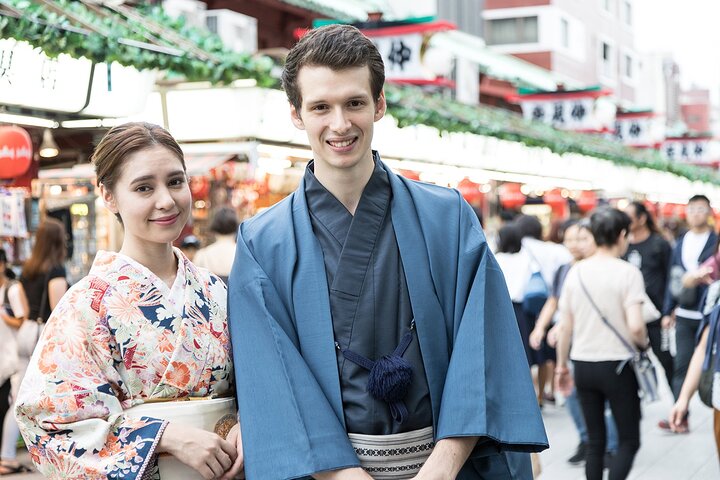
The kimono is a stunning traditional Japanese garment! This tour offers the opportunity to wear a kimono, with professional assistance in dressing and a simple hairstyle included.
The process of changing into a kimono for a group, including hairstyling for women, takes approximately one hour. Once dressed, participants can embark on their tour wearing…
The kimono is a stunning traditional Japanese garment! This tour offers the opportunity to wear a kimono, with professional assistance in dressing and a simple hairstyle included.
The process of changing into a kimono for a group, including hairstyling for women, takes approximately one hour. Once dressed, participants can embark on their tour wearing the kimono. Don’t forget to bring a camera!
The tour includes visits to 2 to 3 attractions, chosen with the guide from a list of options.
Sizes: Kimonos are available in sizes S to 3L. If a perfect fit isn’t available, the professional staff will ensure the best possible fit. For men’s kimonos longer than 190cm, an additional fee of 3300 JPY applies, payable directly to the kimono shop staff.
Start time: The experience start time may vary, with the entire experience lasting about 1 hour from the tour’s commencement.
Kimono return: Please ensure the kimono is returned by 5pm.
For a full refund, cancel at least 24 hours before the scheduled departure time.
For a full refund, cancel at least 24 hours before the scheduled departure time.