Experience the best of Busan and Gyeongju on this 2-day customized tour. Explore cultural landmarks, indulge in fresh seafood, and immerse yourself in the rich history and natural beauty of these captivating cities.
Experience the best of Busan and Gyeongju on this 2-day customized tour. Explore cultural landmarks, indulge in fresh seafood, and immerse yourself in the rich history and natural beauty of these captivating cities.
Busan Highlights
Haedong Yonggungsa Temple, Busan - The tour will commence after confirming your location and time. Haedong Yonggungsa is one of South Korea’s rare seaside Buddhist temples, boasting over 600 years of history. Its unique location and mystical occurrences make it a standout place of worship.
Haeundae Dalmaji-gil Road - Known as…
Busan Highlights
Haedong Yonggungsa Temple, Busan - The tour will commence after confirming your location and time. Haedong Yonggungsa is one of South Korea’s rare seaside Buddhist temples, boasting over 600 years of history. Its unique location and mystical occurrences make it a standout place of worship.
Haeundae Dalmaji-gil Road - Known as Busan’s Montmartre, Dalmaji-gil Road is celebrated for its stunning views of the blue ocean, white sandy beach, Camellia forest, and pine tree forest, making it one of Busan’s eight scenic wonders.
Haeundae Beach - Situated in Busan’s Haeundae District, Haeundae Beach is a renowned urban beach, often considered one of South Korea’s most famous and popular beaches.
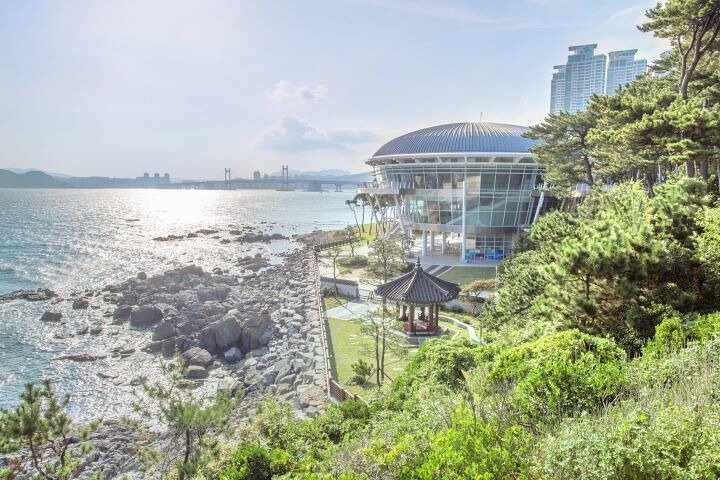
Dongbaekseom - Dongbaekseom Island, located near Haeundae Beach in Busan, honors Scholar Choi Chi-won. Accessible via a long walking path, visitors can explore attractions like the mermaid statue, representing a legendary love story, the Nurimaru APEC House, and the Carved stone.
Gwangandaegyo Bridge - The Gwangandaegyo, or Diamond Bridge, is a suspension bridge in Busan, South Korea, connecting Haeundae-gu to Suyeong-gu. Spanning 7,420 meters, it is the country’s second-longest bridge after the Incheon Bridge, offering scenic seaside views.
UN Memorial Cemetery - The UN Memorial Cemetery in Korea commemorates UN soldiers from 16 countries and UN aids from five countries who perished during the Korean War (1950-1953). It is the only memorial cemetery worldwide dedicated to UN soldiers. Originally holding up to 11,000 graves, most soldiers were repatriated at their families’ request, leaving 2,300 graves. The serene park covers 135,000 square meters and features notable sites like the Memorial Service Hall, Memorabilia Hall, and various national monuments.
Oryukdo Skywalk - Located at Seungdumal, Oryukdo Skywalk features iron columns over a 35-meter-high coastal cliff and a 15-meter glass bridge made of 24 glass plates. The glass flooring, made with bulletproof film, ensures safety while offering thrilling views of the waves below. The sea view from the skywalk is perfect for photos.
Songdo Beach - Established in 1913, Songdo Beach was Korea’s first beach. After a decline, efforts to restore its beauty have made it a popular tourist destination once again, attracting over five million visitors annually with its pristine sandy beach, clear water, and overwater cable car.
Busan Gamcheon Culture Village - Known as the “Machu Picchu of Busan,” Gamcheon Culture Village features houses built in a staircase fashion on a coastal mountain. The vibrant alleys are adorned with murals and sculptures created by residents.
Busan Tower - Standing 69 meters above sea level at a height of 120 meters, Busan Tower is a symbol of Busan. Its top is modeled after the Dabotap Pagoda in Bulguksa Temple, Gyeongju. The tower offers a stunning night view and features attractions like the Statue of the Great Admiral Yi Sun-sin and the Bell of the Citizens.
Gukje Market - Originating from Korean War refugees, Gukje Market is Busan’s largest market, offering wholesale prices on clothing, silk, linen, and more. Similar to Seoul’s Namdaemun Market, it features narrow alleys filled with vendors and extends into Kwangbok-dong & Namp’o-dong.
남포동 - Nampodong, Busan’s old downtown, offers a mix of brand shops and affordable local stores, along with street food alleys.
Jagalchi Market - A symbol of Busan, Jagalchi Market is famous nationwide. Visitors can enjoy fresh raw fish and see women selling seafood along the road and shore. The tour concludes with a return to the starting point.
Gyeongju Highlights
Seokguram - Part of the Gyeongju UNESCO itinerary, Seokguram is an artificial granite grotto with an antechamber, corridor, and main rotunda. It houses a monumental statue of the Sakyamuni Buddha, surrounded by devas, bodhisattvas, and disciples, showcasing East Asian Buddhist art. The innovative construction used over 360 stone slabs.
Bulguksa Temple - Bulguksa is a Buddhist temple complex with wooden buildings on stone terraces, divided into three areas representing the land of Buddha. The stone terraces, bridges, and pagodas demonstrate the fine masonry of the Silla.
Gyeongju Folk Craft Village - Home to 40 thatched and tile-roofed houses, Gyeongju Folk Craft Village showcases traditional arts and crafts, including metal, pottery, timber, jewels, hanbok, and stone crafts.
Daereungwon Tomb Complex - The Daereungwon Tomb Complex in Gyeongju features large ancient tombs of Silla kings and nobles. Of the 23 tombs, 13 have been excavated, with Cheonmachong open to the public, revealing 11,500 artifacts from the fifth century.
Gyeongju Gyochon Traditional Village - Visitors to Gyeongju Gyochon Village can explore the House of the Gyeongju Choi Clan and sample Gyeongju Gyodong Beopju Liquor. The village highlights the Choi Clan’s wealth and lifestyle, with nearby attractions like Gyerim Forest and Naemulwangneung Royal Tomb.
Cheomseongdae Observatory - Built during Queen Seondeok’s reign, Cheomseongdae Observatory is a Gyeongju landmark. The cylinder-shaped observatory, made of 365 stones, symbolizes the days in a year and stands 9.17 meters high.
Gyeongju National Museum - Gyeongju National Museum houses historical and cultural artifacts of the Silla dynasty. Recent renovations have improved visitor facilities and expanded exhibition spaces, enhancing its role as a cultural center.
Donggung Palace and Wolji Pond - Once a secondary palace for the Silla crown prince, Donggung Palace and Wolji Pond served as a banquet site. The pond, created in 674, features islands and hills, and was renamed after a pottery fragment revealed its true name.

- Private transportation
- Free pickup and drop-off
- Guide + driver or driving guide
- Gas + toll + parking fees
- Busan, Gyeongju free transport service after the tour
- Entrance decides to go to places and pay yourself on the spot
- Private transportation
- Free pickup and drop-off
- Guide + driver or driving guide
- Gas + toll + parking fees
- Busan, Gyeongju free transport service after the tour
- Entrance decides to go to places and pay yourself on the spot
- Meals
- Hotel, Airbnb, Accommodation
- Entrance fees
- Meals
- Hotel, Airbnb, Accommodation
- Entrance fees
Busan and Gyeongju are vibrant and captivating cities rich in culture and history. Busan’s “Haeundae,” a renowned tourist destination familiar to all Koreans, was named after the ancient Shilla philosopher Choi Chi-won (also known by his pen names ‘Haeun,’ ‘Goun,’ ‘Haebu’), who was enchanted by the area’s beauty. Additionally, Queen Jinseong, the 51st…
Busan and Gyeongju are vibrant and captivating cities rich in culture and history. Busan’s “Haeundae,” a renowned tourist destination familiar to all Koreans, was named after the ancient Shilla philosopher Choi Chi-won (also known by his pen names ‘Haeun,’ ‘Goun,’ ‘Haebu’), who was enchanted by the area’s beauty. Additionally, Queen Jinseong, the 51st ruler of Silla, was known for her frequent visits to Busan’s “Haeundae” Hot Springs to treat her skin ailments.
Visitors can savor an abundance of fresh seafood at Jagalchi in Busan, explore modern history at Gukje Market and Gamcheon Culture Village, and create lasting memories at Haeundae, a stunning sea of romance. Experience the unique Korean sentiment where the past and present coexist in Busan and Gyeongju, immersing yourself in Korean life, culture, tradition, history, and natural landscapes during a two-day trip.
- Please advise any specific dietary requirements
- At the time of booking Minimum, 2 people numbers apply. There is a possibility of cancellation after confirmation if there are not enough passengers to meet the requirements. In the event of this occurring, you will be offered an alternative or full refund
- Meet up point: Customers are requested on time and location and we will pick- your up in front of the exit gate with your name picker.
- Please let me know your total travel luggage before arriving at the airport and train station if you can possible.
For a full refund, cancel at least 24 hours before the scheduled departure time.
For a full refund, cancel at least 24 hours before the scheduled departure time.